I taught this lesson with lower elementary a few weeks ago. We talked about primary colors and how they are super special colors because you can’t create them with any other colors. And primary colors can create a ton of new colors when mixed together.
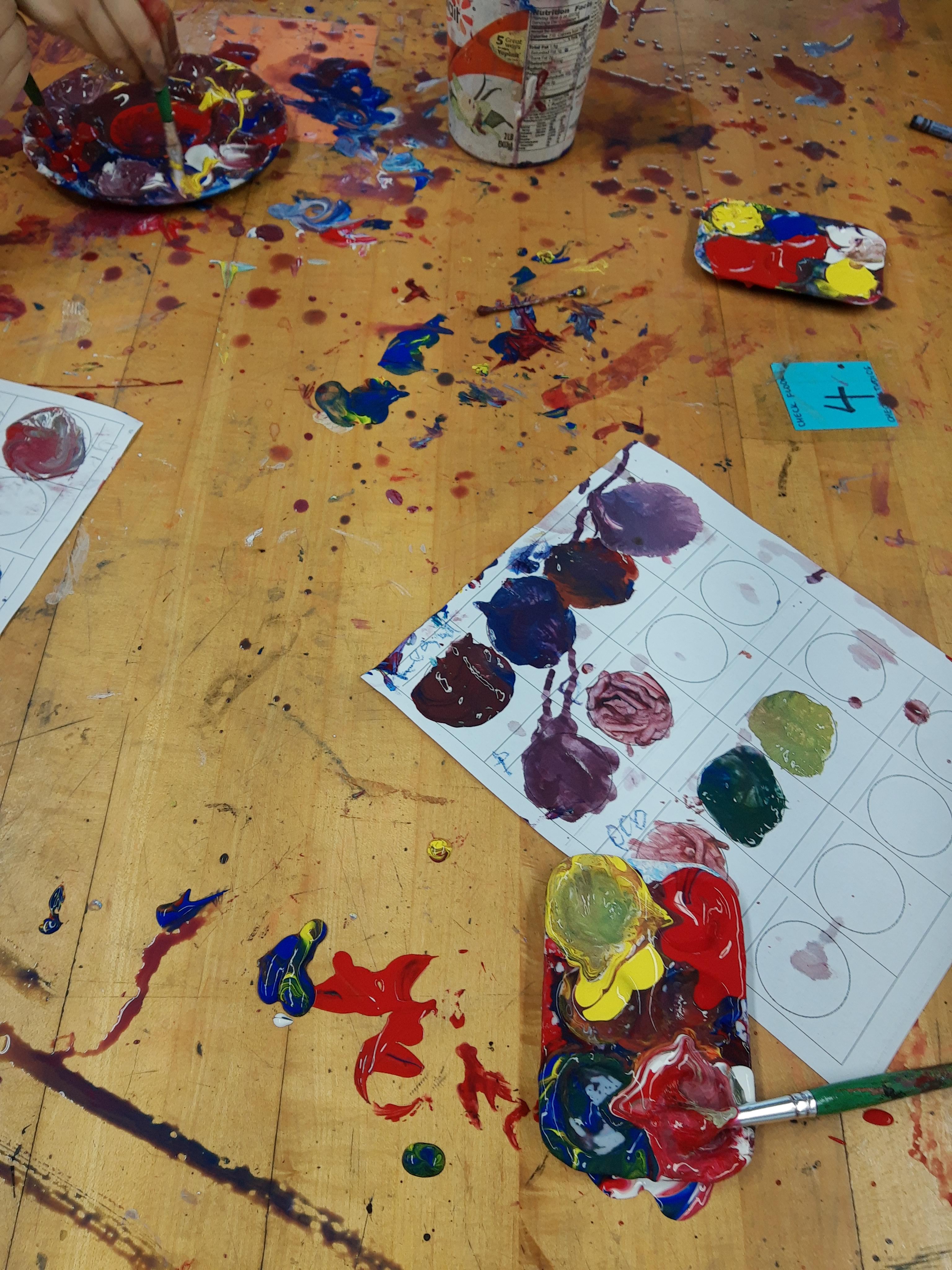
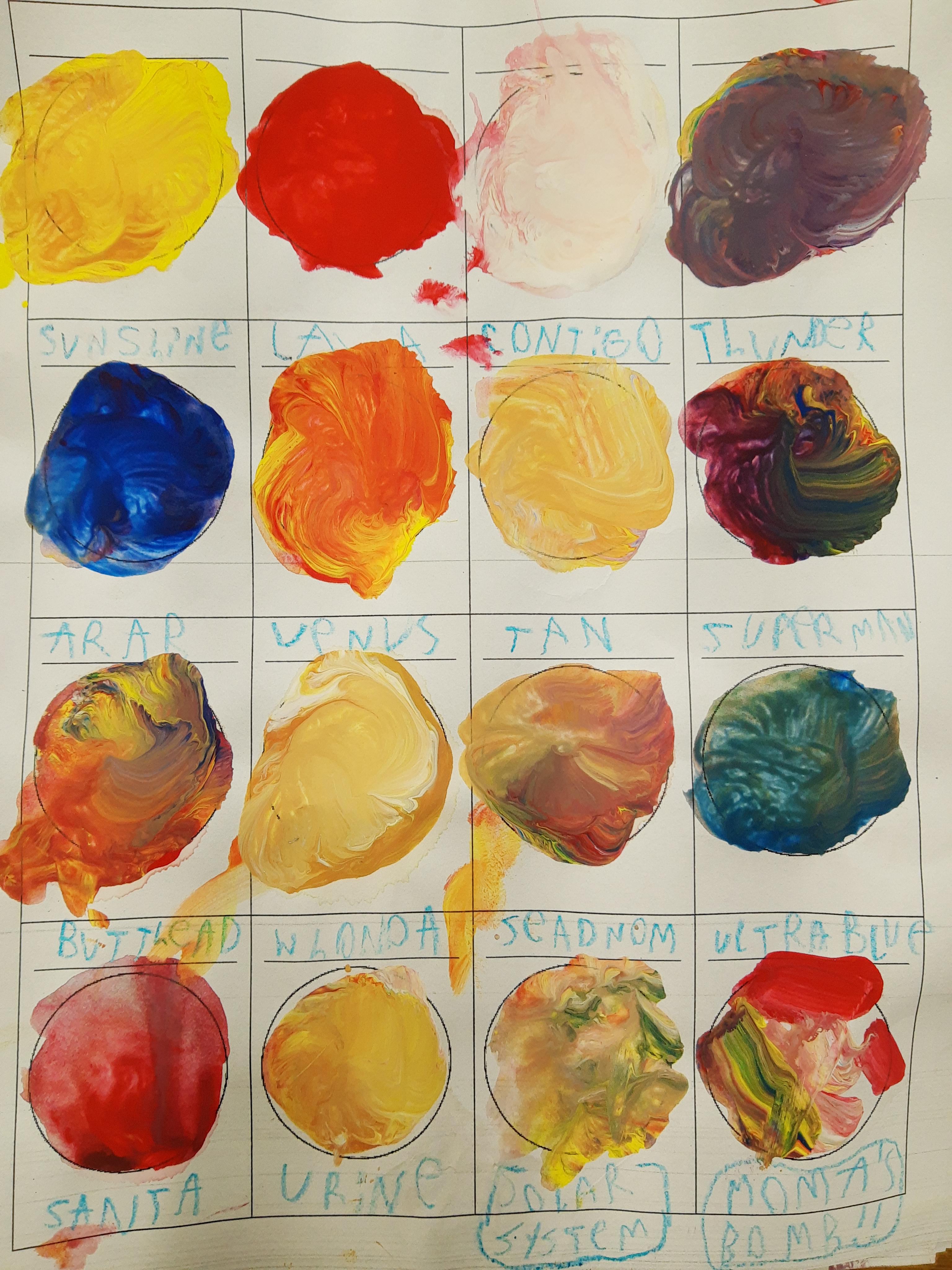
To practice mixing colors, each table got red, yellow, blue, and white paint and students created and named as many colors as they wanted. I love how creatively students named their colors. Some of my favorite color names were “blainbow”, “stinckpot”, “peace” and “thunder”.
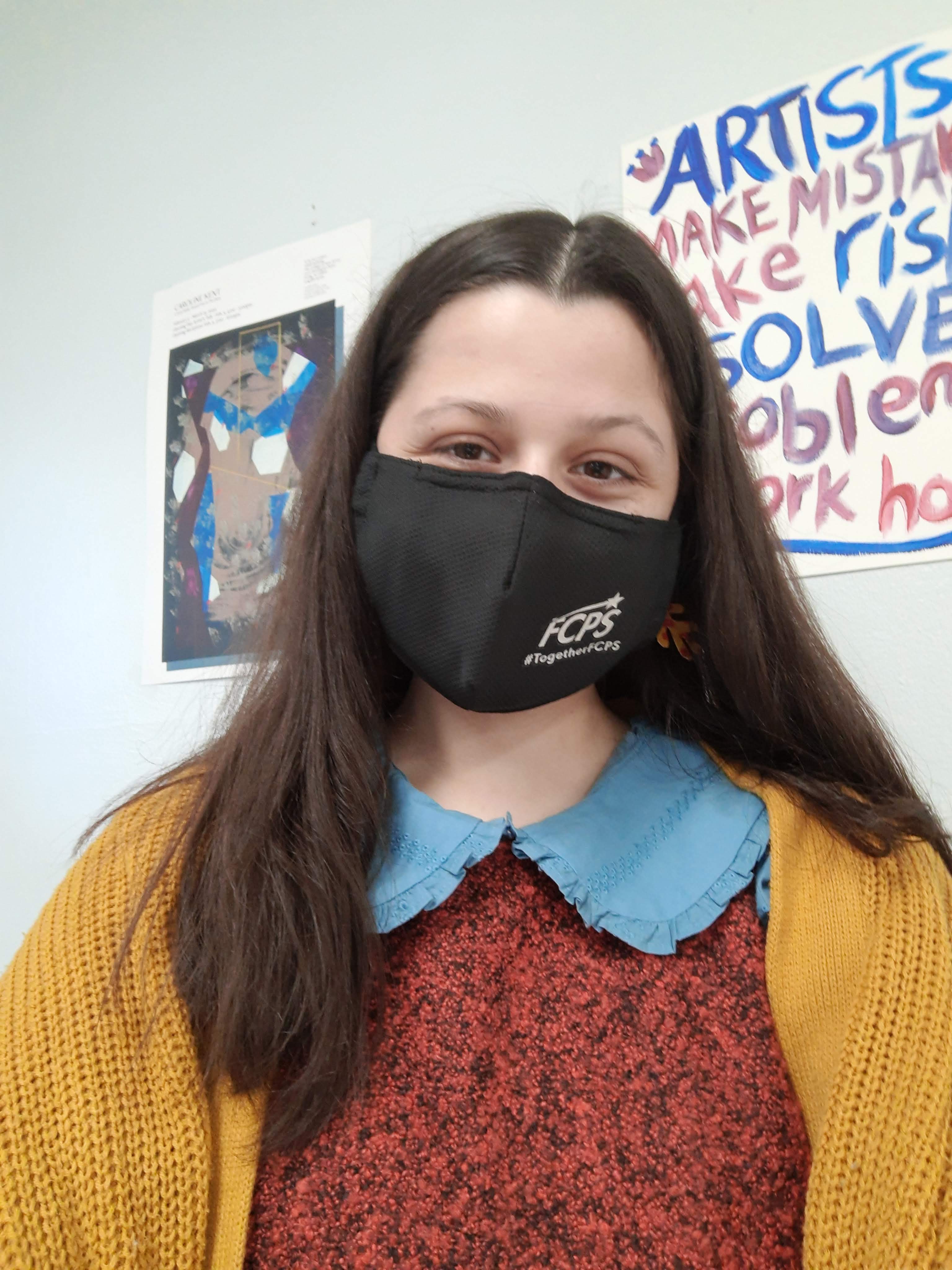
I even wore red, yellow, and blue to match my primary color lesson (and to achieve my goal of being like Ms. Frizzle). My hand was very messy at the end of the day which I love because a messy hand is the mark of an artist 🙂
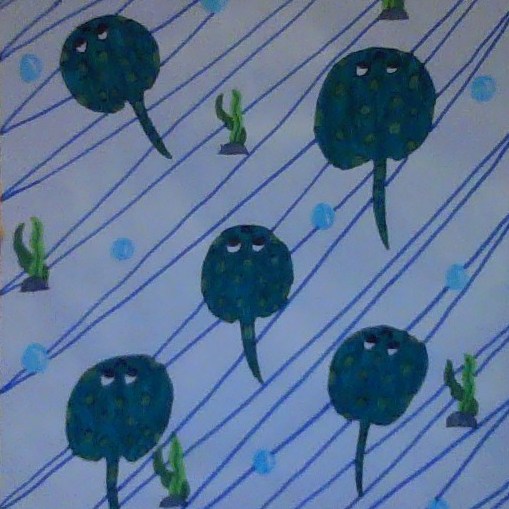
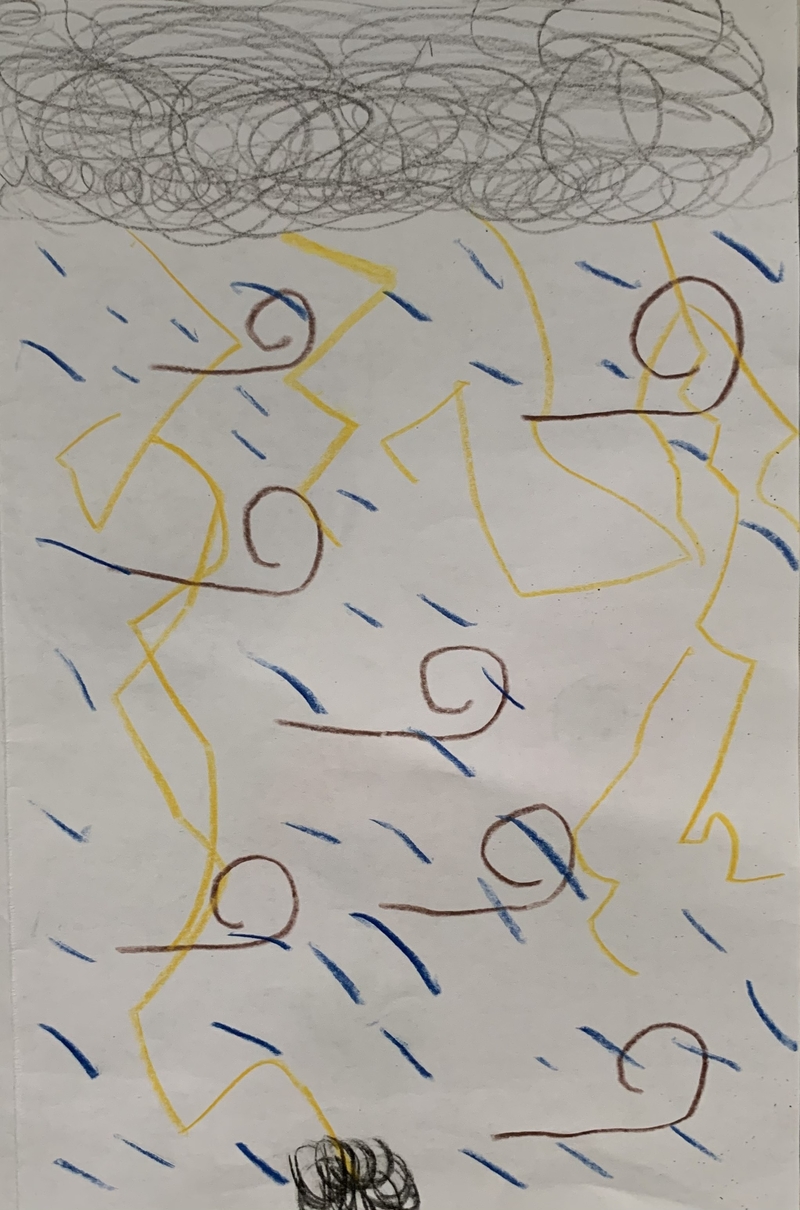
Last school year, one of the lessons I taught was about creating rhythm using repetition and movement (moving the eye around the page). The lesson was taught virtually and these are some of the artworks my students came up with:
Last week, I taught a printmaking camp. I was subbing in for another teacher, and even though I had her lesson plan, I ended up changing a lot of things to account for the materials already available. For the first day, I wanted campers to make something really large using recycled materials. I remembered making collagraphs in my college printmaking class and it was really fun, so I went with it. I also love the textural aspect of collagraphs.
Image above: my art teaching sketchbook where I keep track of my ideas and lessons I’ve taught
Collagraphs – On the first day of camp, campers learned about collagraphs and made BIG printing plates. I cut out cardboard that is about 22 x 16″ to fit on 24 x 18″ paper.
Before creating their plates, I gave campers the theme of animals and had them sketch out and brainstorm at least 4 different ideas. They all came up with different animals which was awesome!
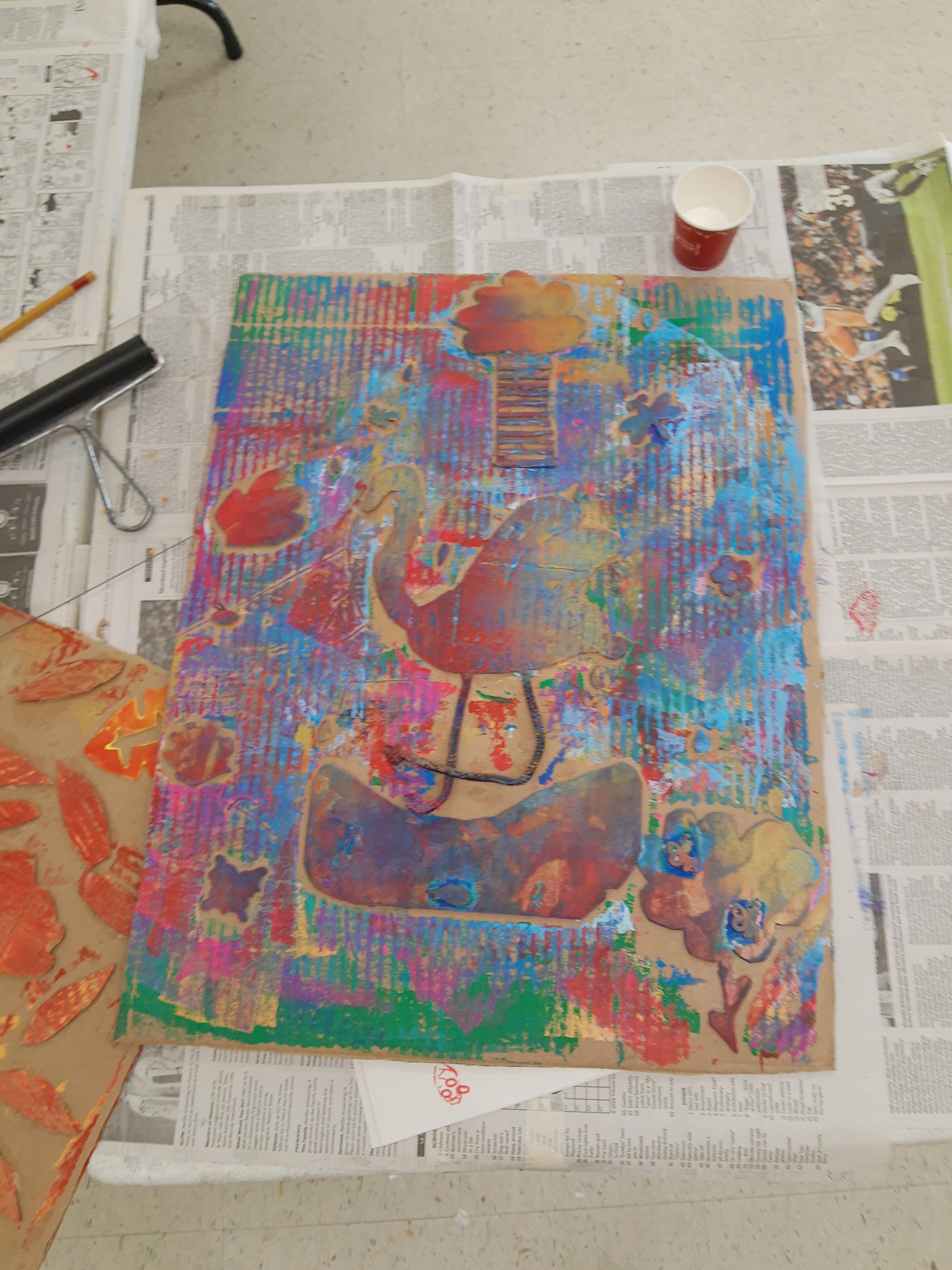
Once their ideas were set, they began assembling their collagraphs. I had different sizes of scrap cardboard laid out for campers to use as well as foam, felt, pipe-cleaners, and other crafty materials to attach to their cardboard plate. One camper even decided to remove the top layer of the cardboard to reveal the corrugation underneath to create texture. We also discussed how different materials will create different textures (fabric creates a fuzzy texture, cardboard appears rough).
Once everything had been glued down to the plate, I handed out cups of mod podge and brushes and campers applied mod podge all over the top surface of their plates so everything was sealed and ready for printing.
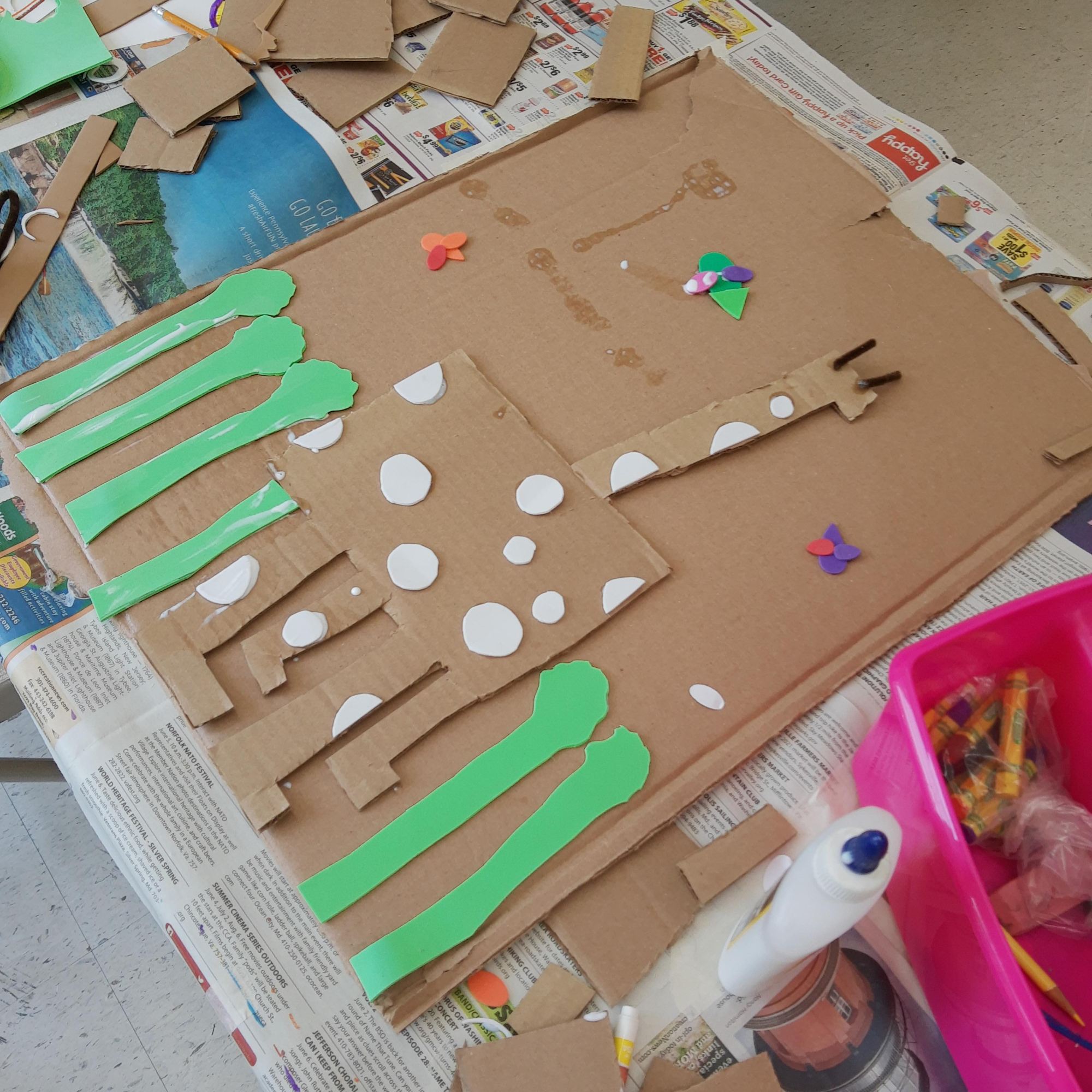
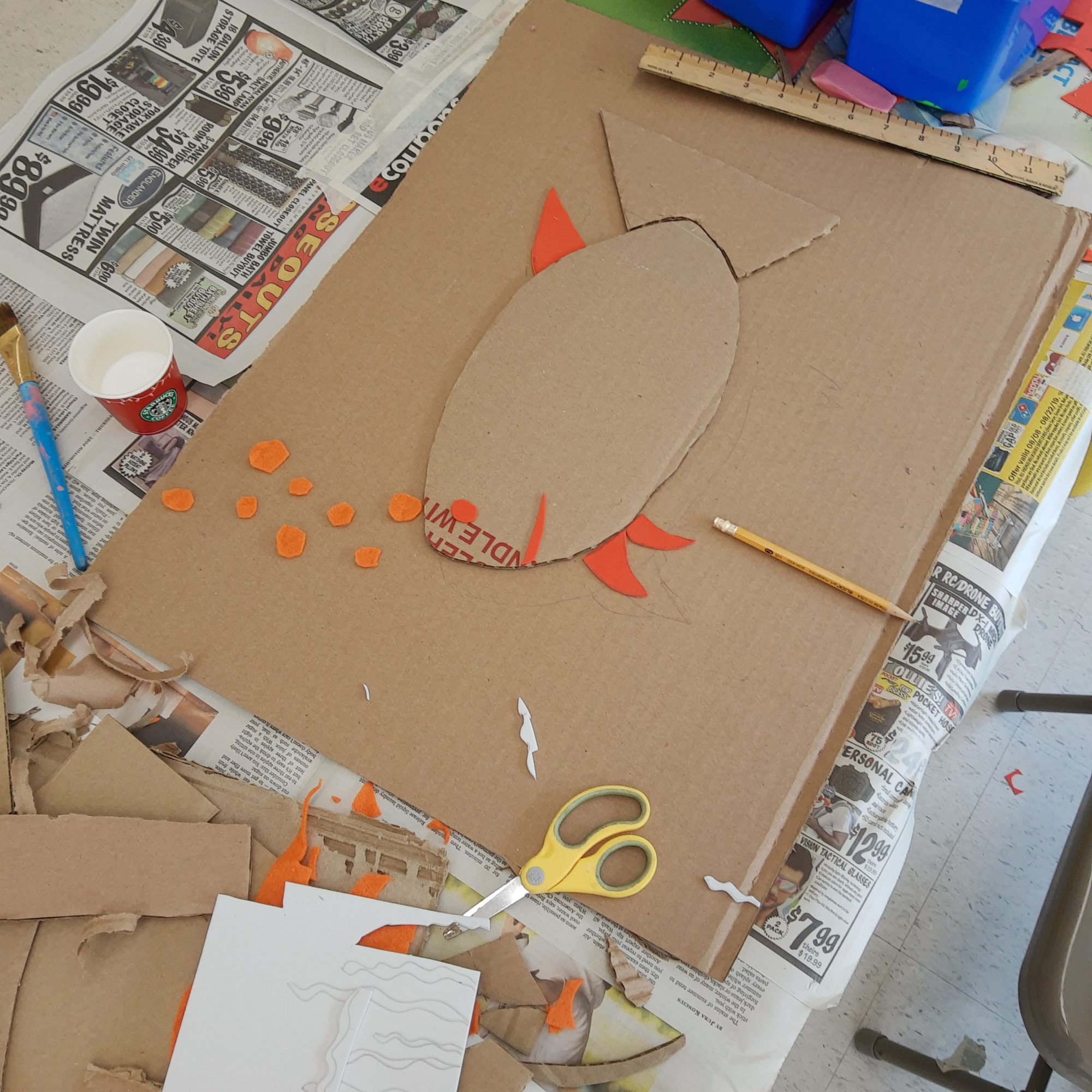
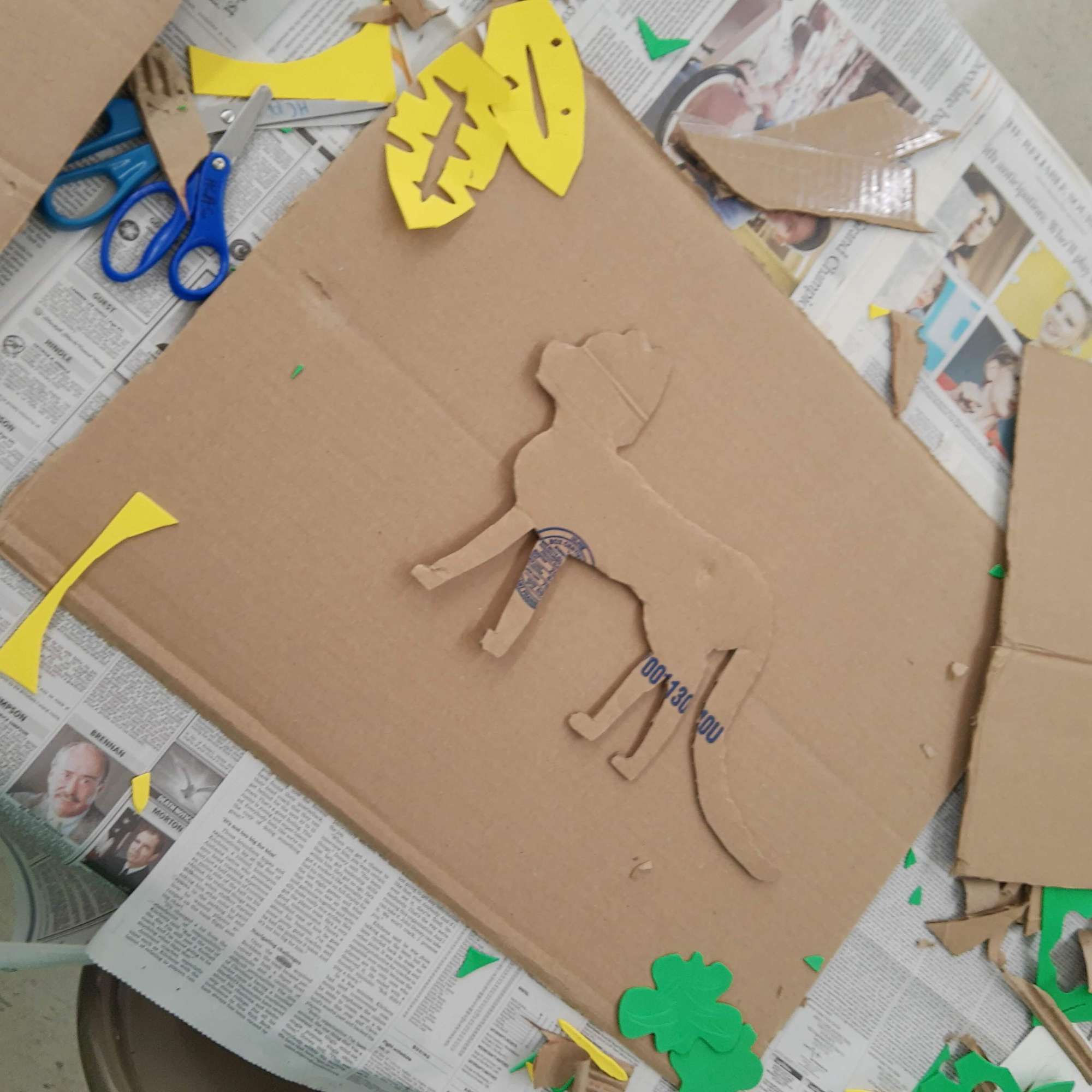
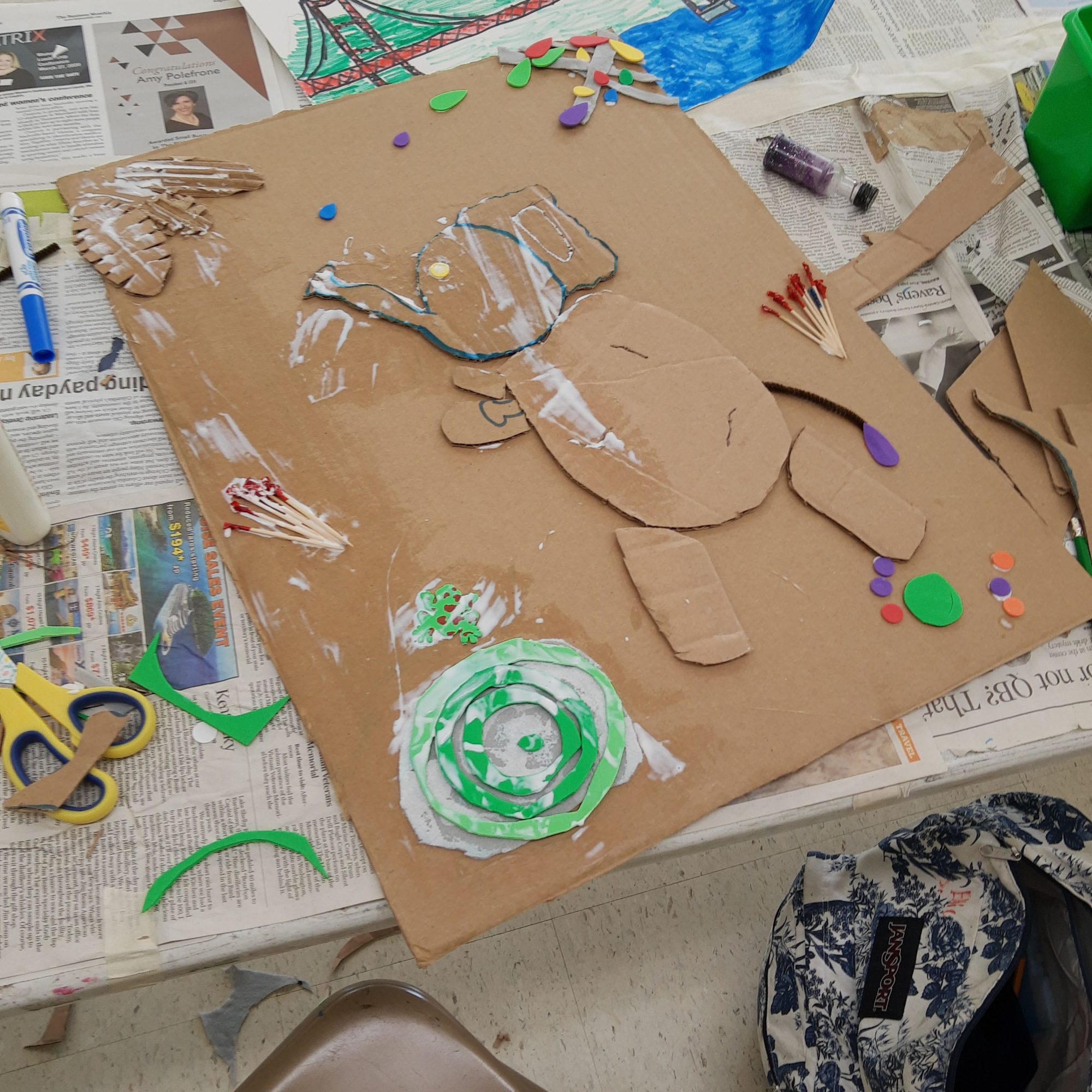
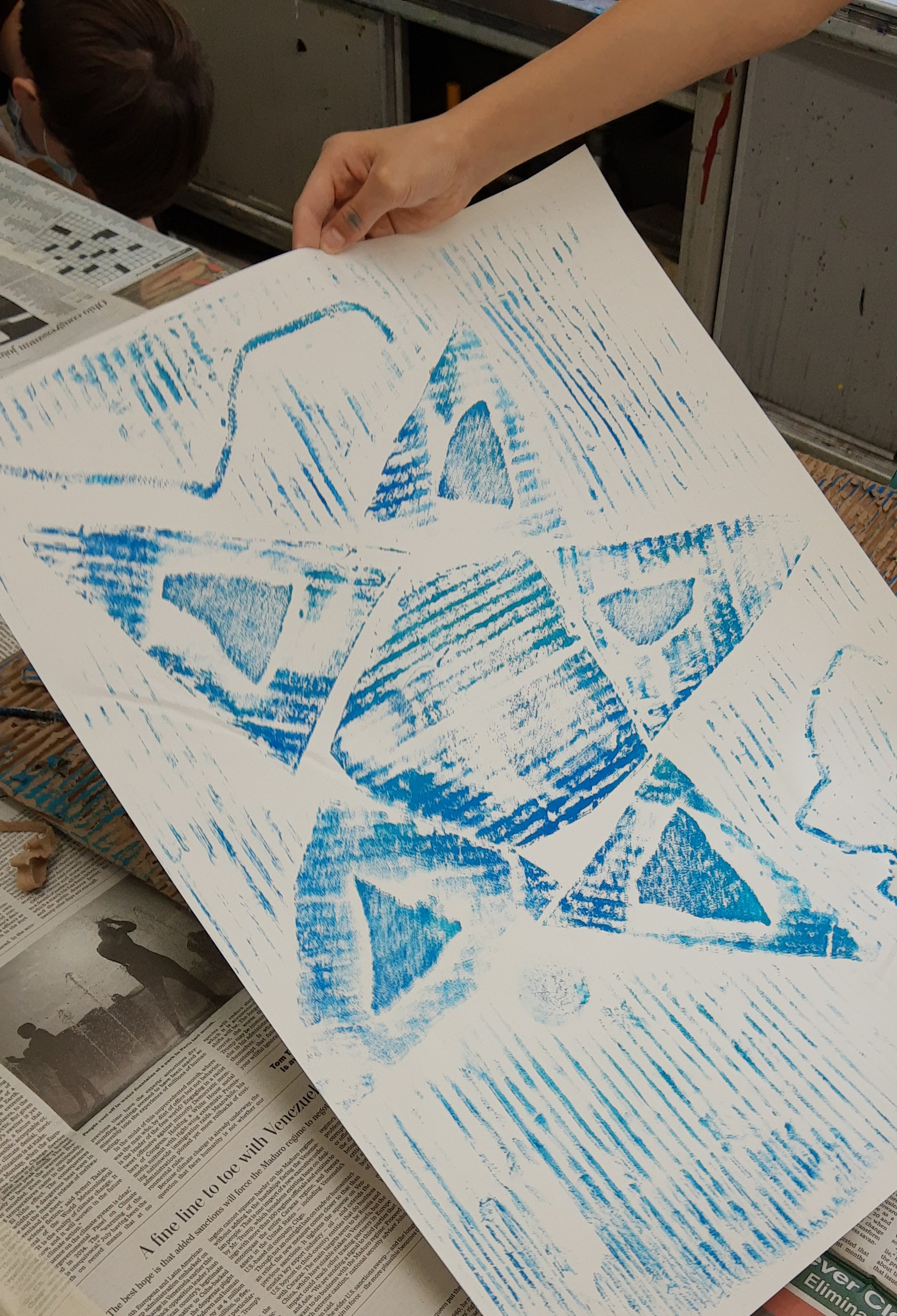
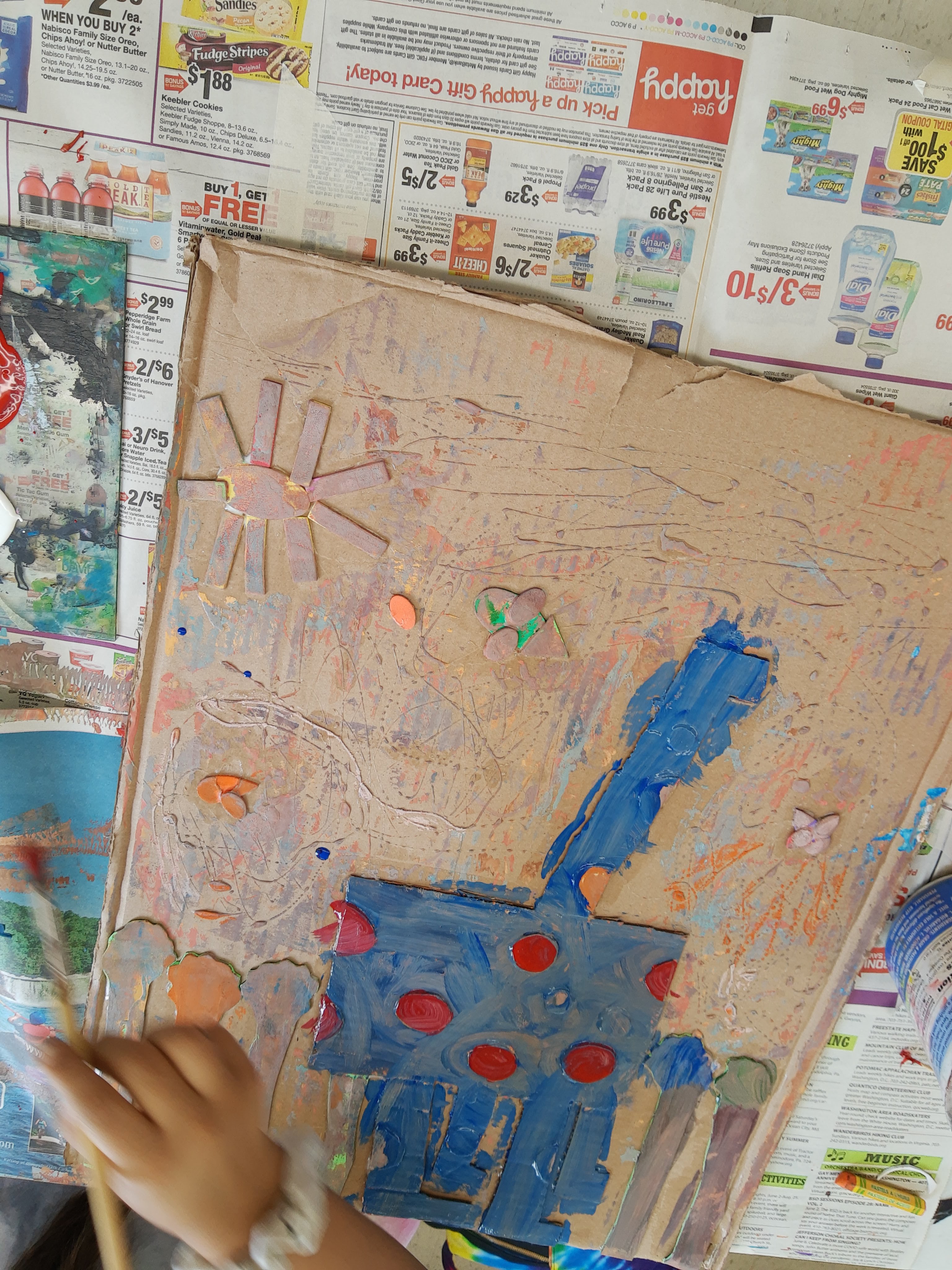
Some of the collagraph plates from campers:
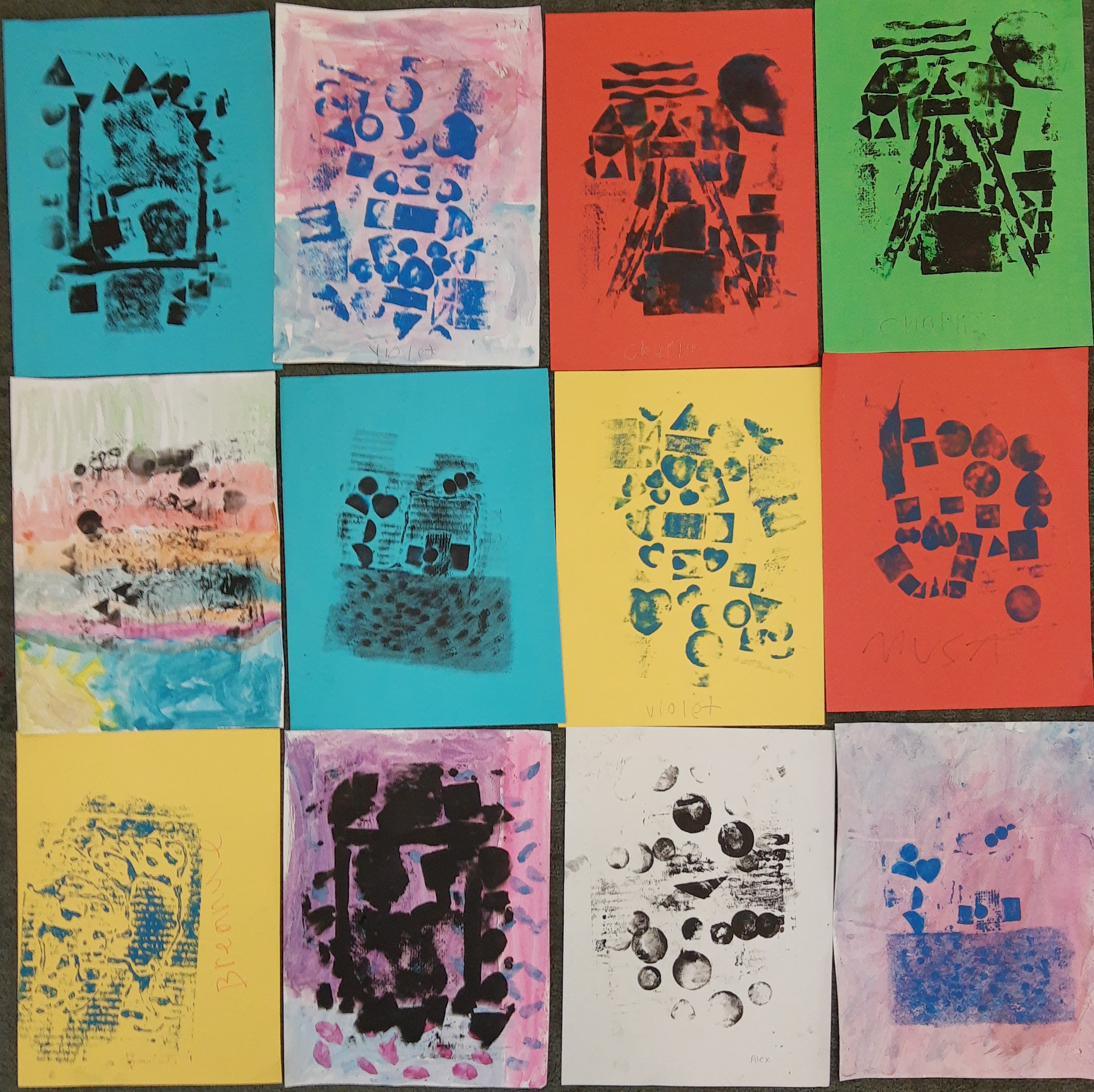
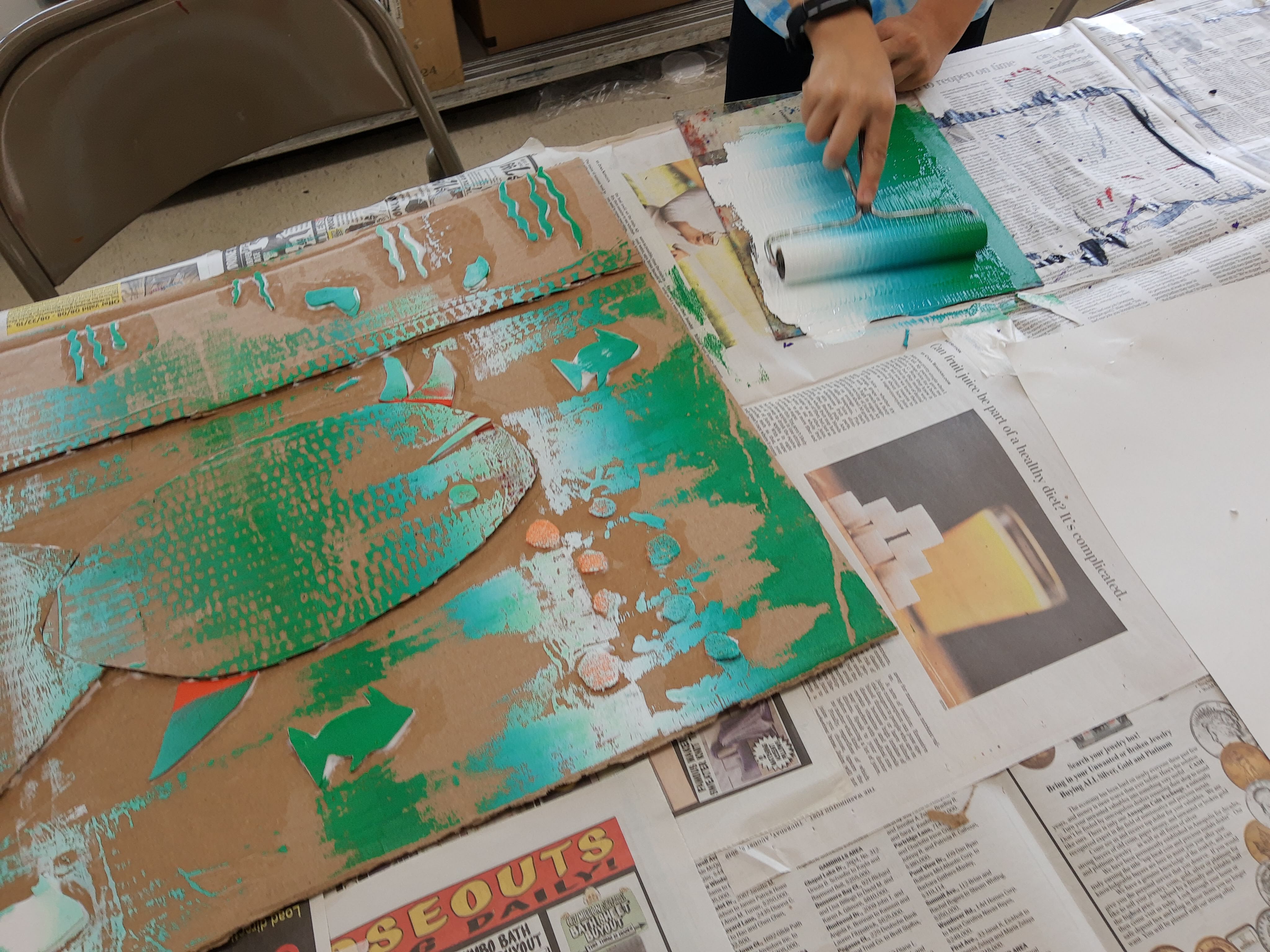
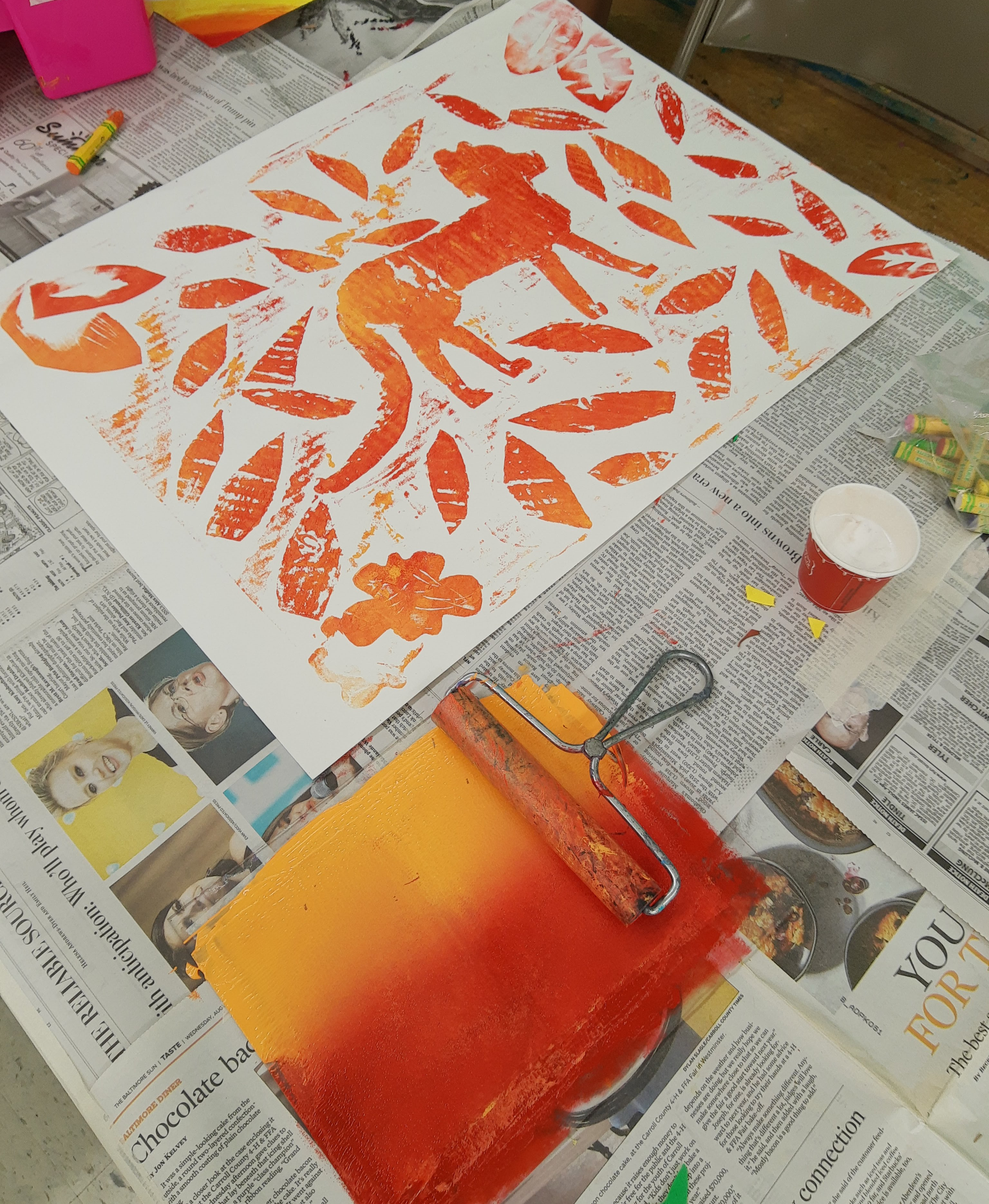
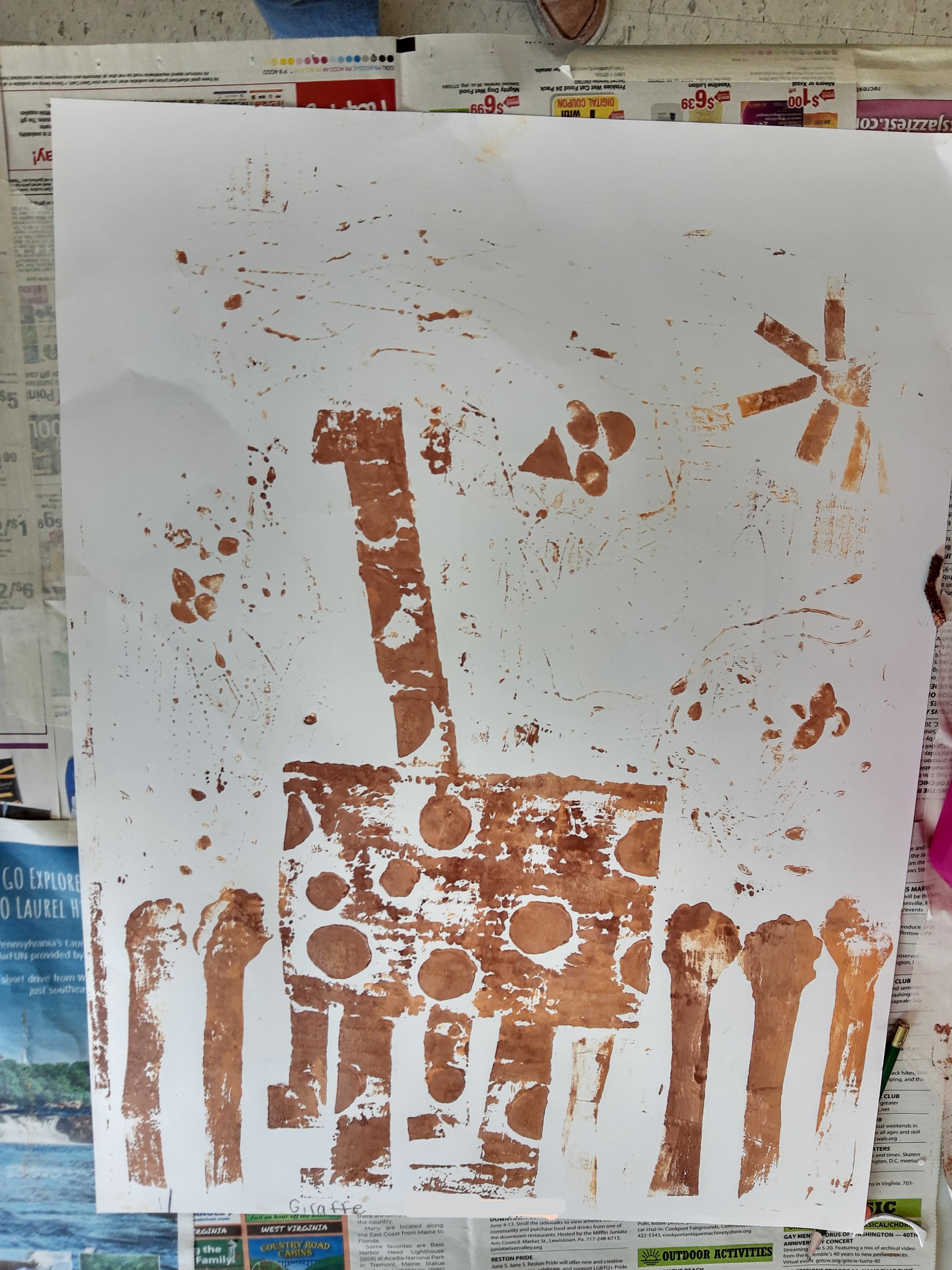
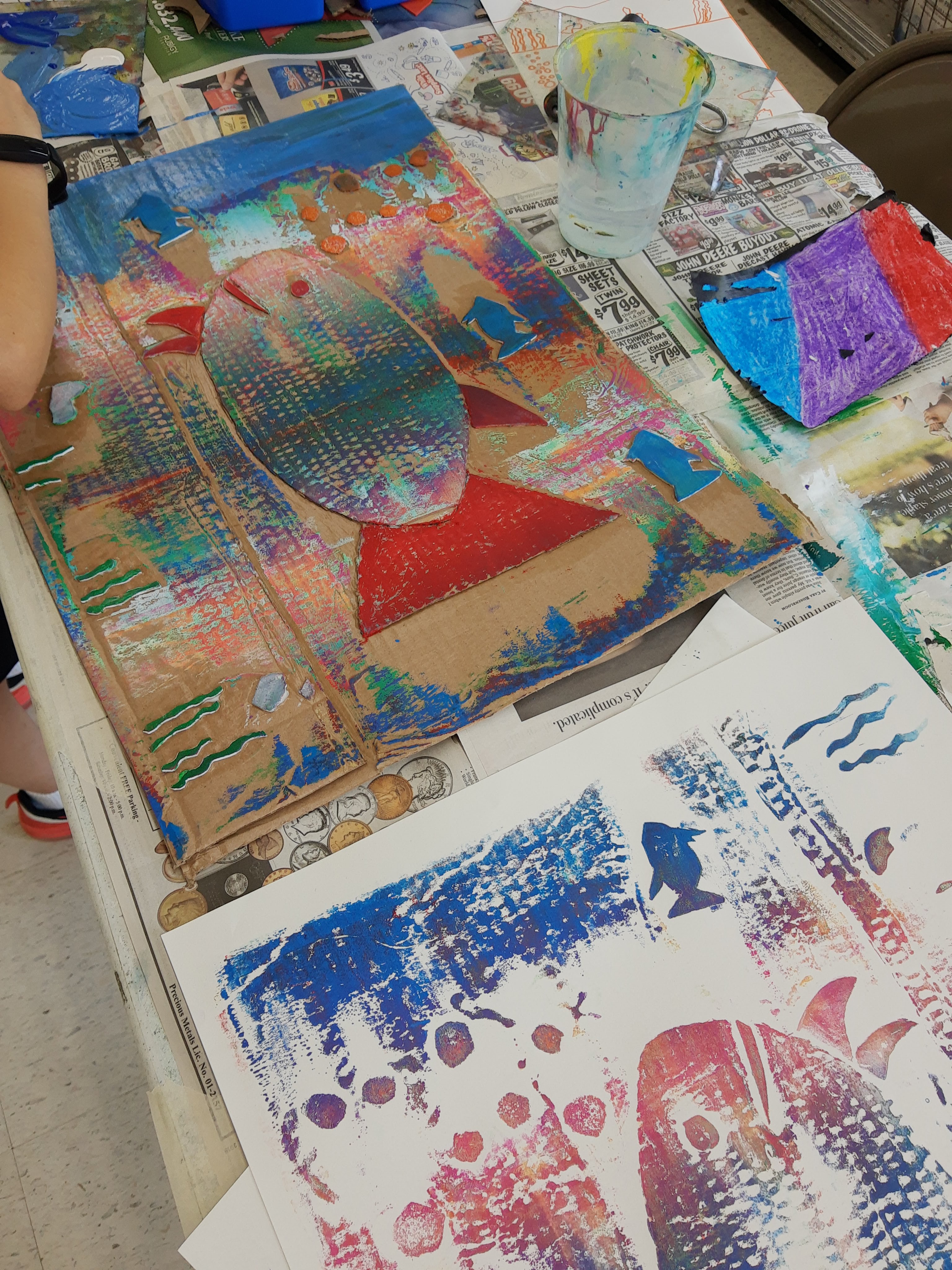
Once the plates were ready, we started printing! I showed the campers how to roll a gradient ink using two colors which they really enjoyed. A lot of them experimented with combining even more colors (some even did 10+ colors at once!). Then comes the fun part – the campers placed their plates face up on the floor with their papers on top and jumped on top to create a strong print. Once they printed, I showed them how to sign the print with the edition, title, and their name.
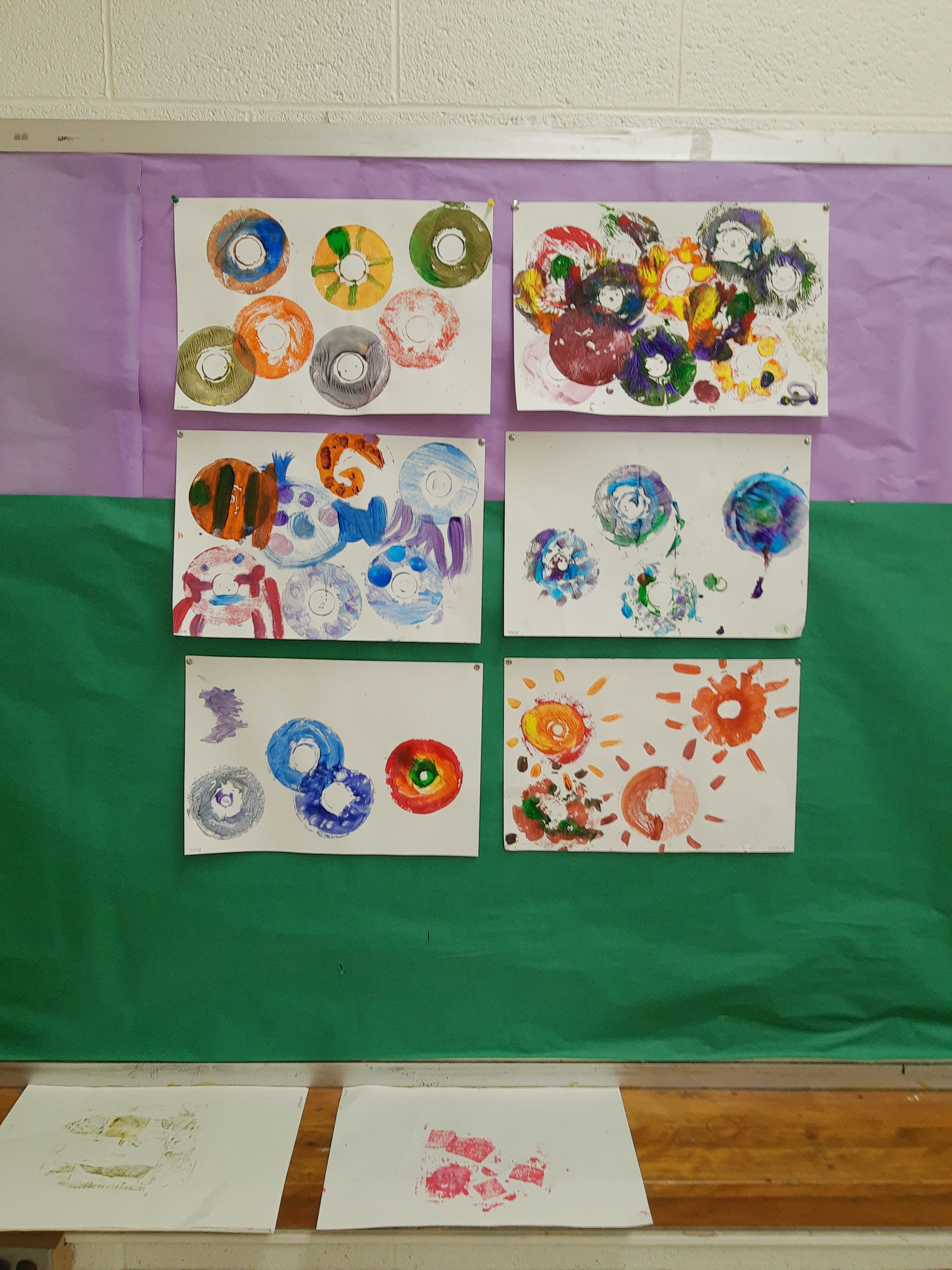
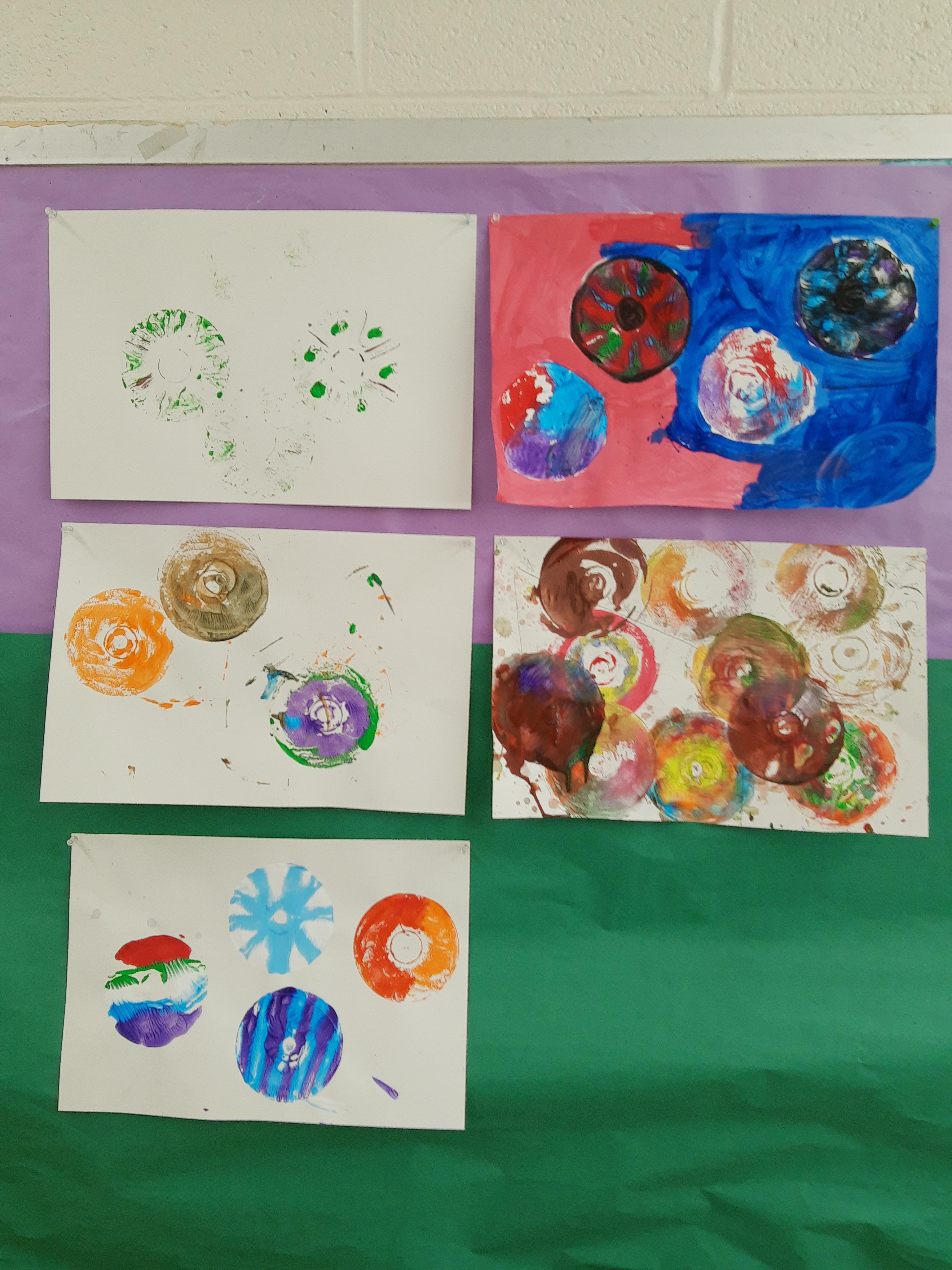
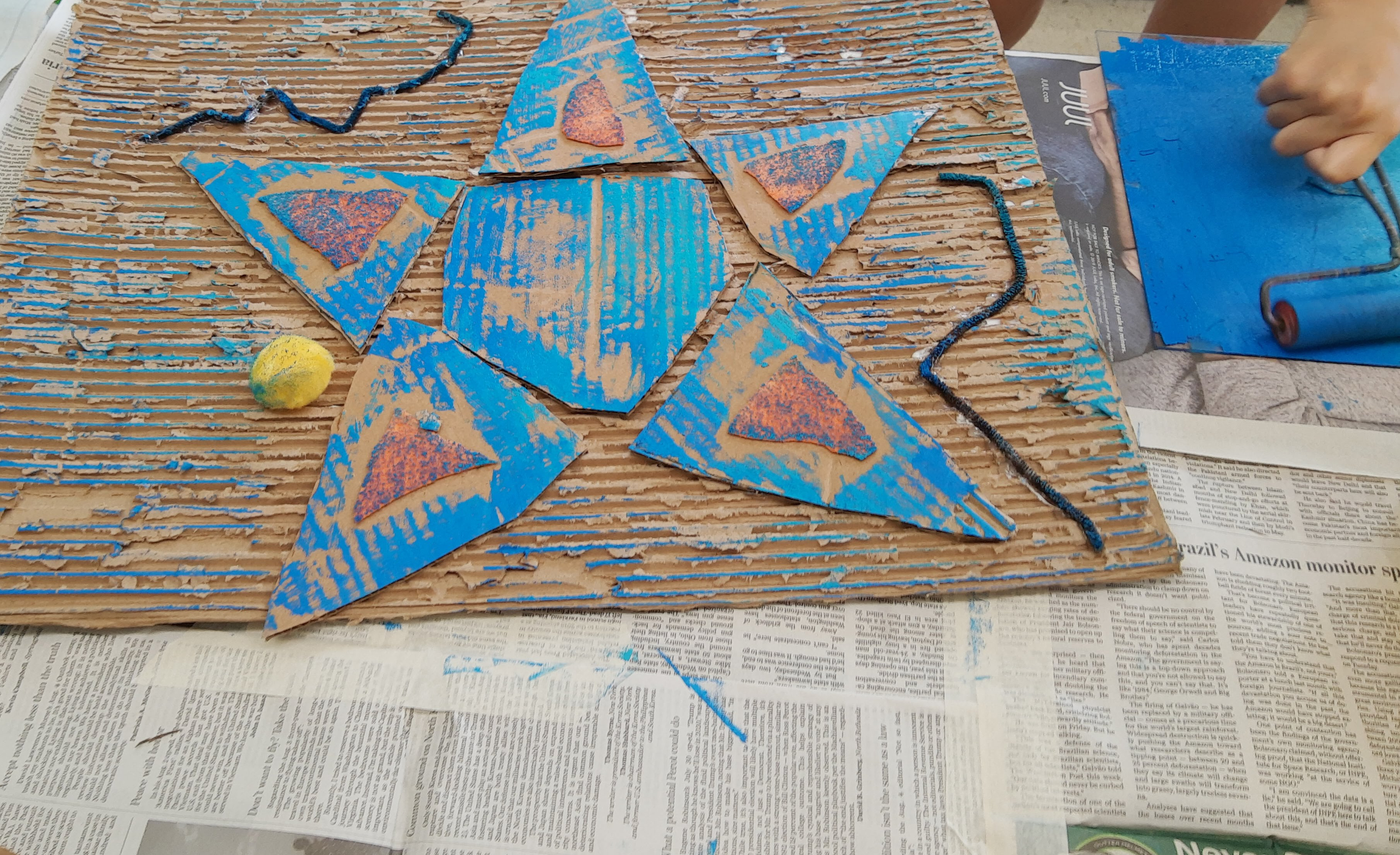
Some prints made by campers:
Once we were done printing, I set out tempera paint for campers to create a more finished, detailed collagraph plate. Only a few campers decided to add paint because many of them really liked all the ink colors from printing and did not want to cover it up.
I had so much fun teaching this printmaking camp and I am excited to bring some of the ideas/projects into my art classroom next school year!
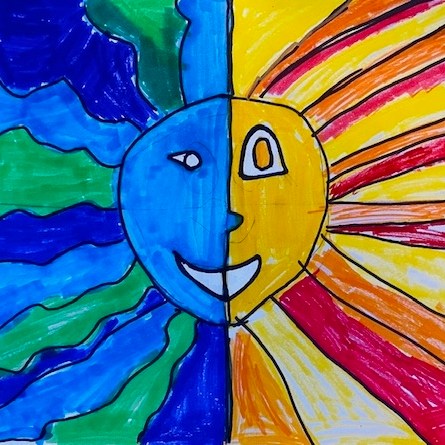
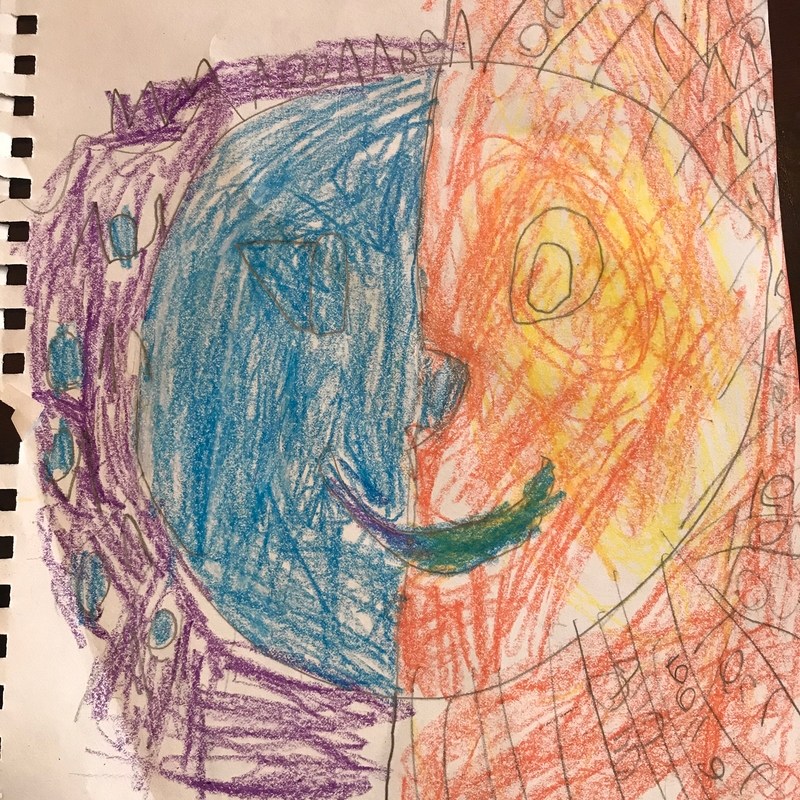
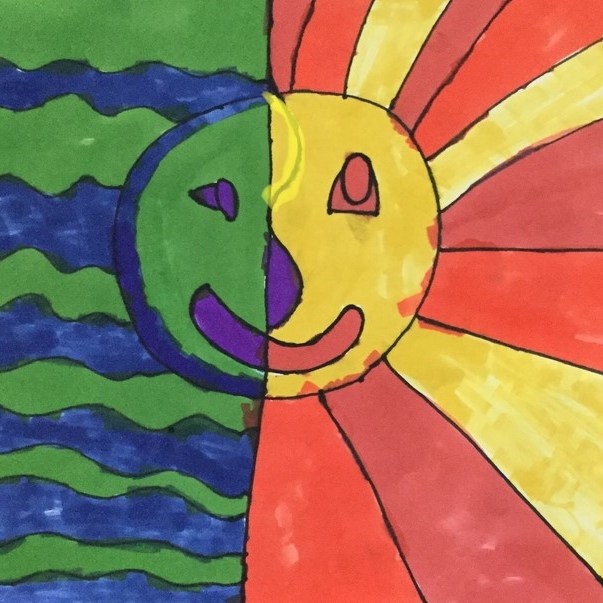
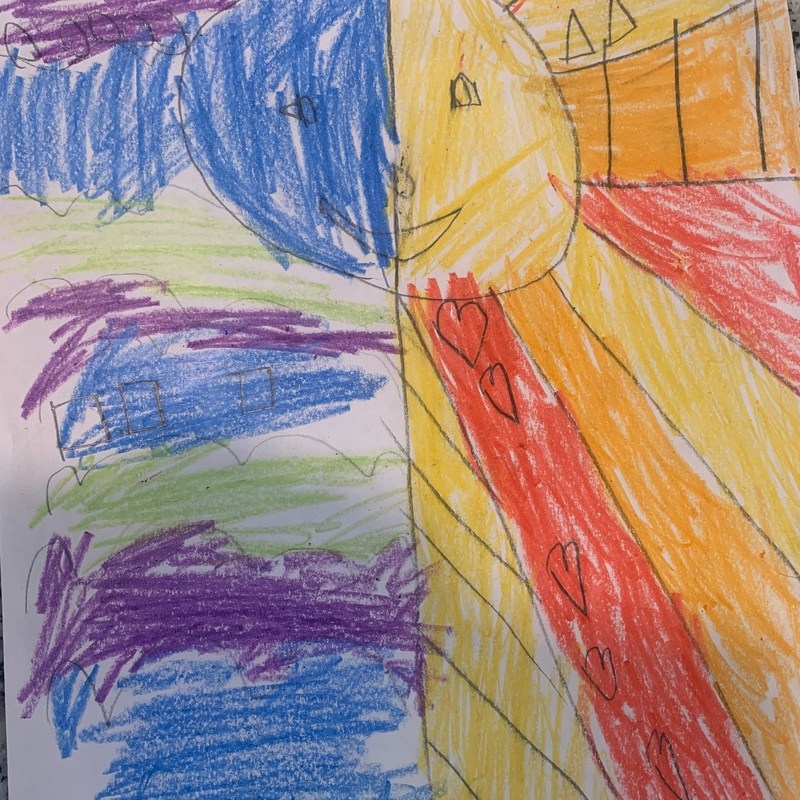
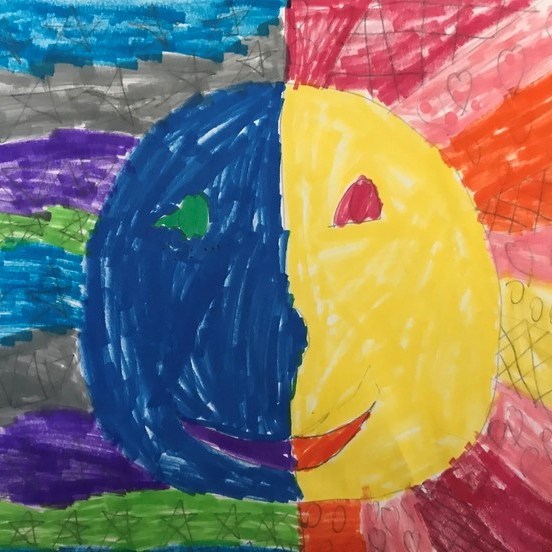
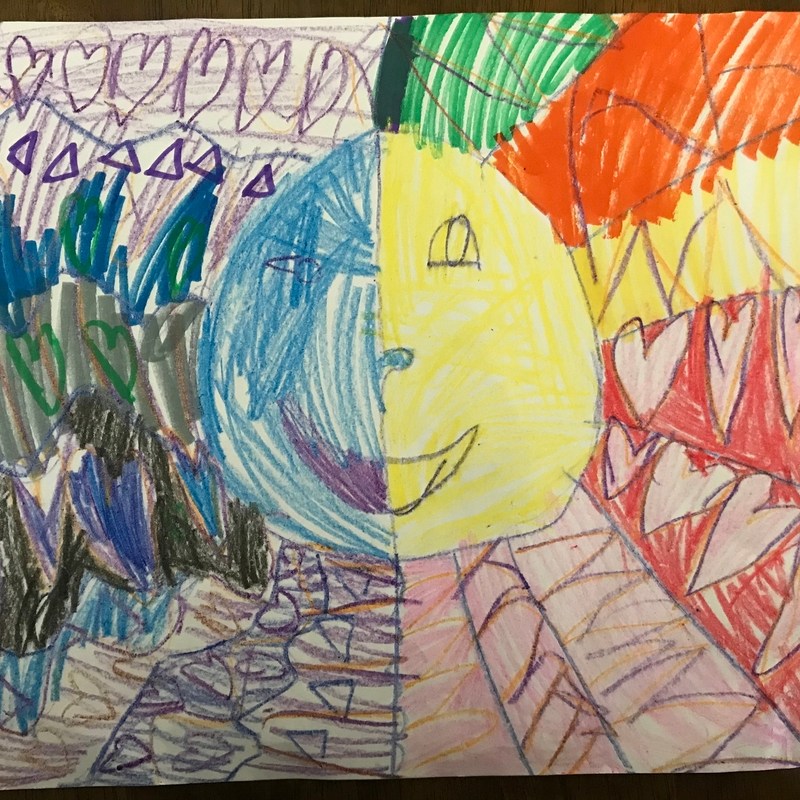
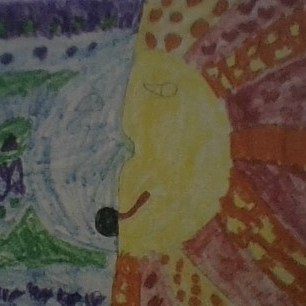
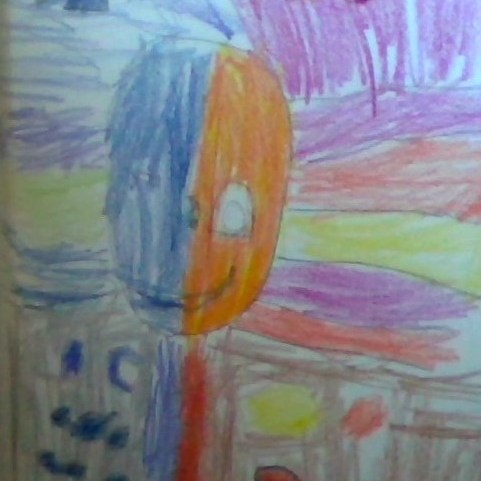
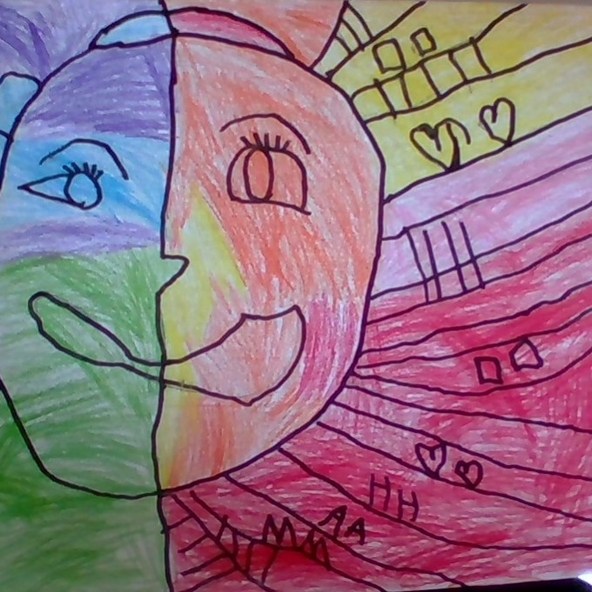
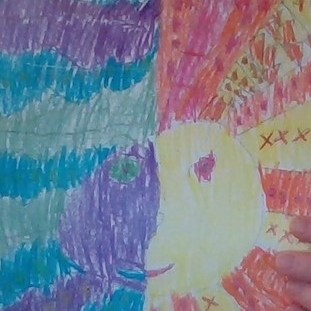
Warm & Cool Sun & Moons: I taught this lesson during my student teaching and I taught it again when I first started teaching. Students learn about warm and cool colors and draw a warm sun and cool moon. The moon side is drawn in profile view (to the side) and the sun is facing forward. We also reviewed patterns and students added different repeating shapes and lines into the background of their drawings.
To continue with learning about colors, we also did a neutral colors and texture drawing of an animal (some students did a scene). I showed students how to draw a few different animals, and then students used fabric, bark, and other textured items to create a textured rubbing. I also let them use a few warm or cool colors as well to complement the neutral colors.
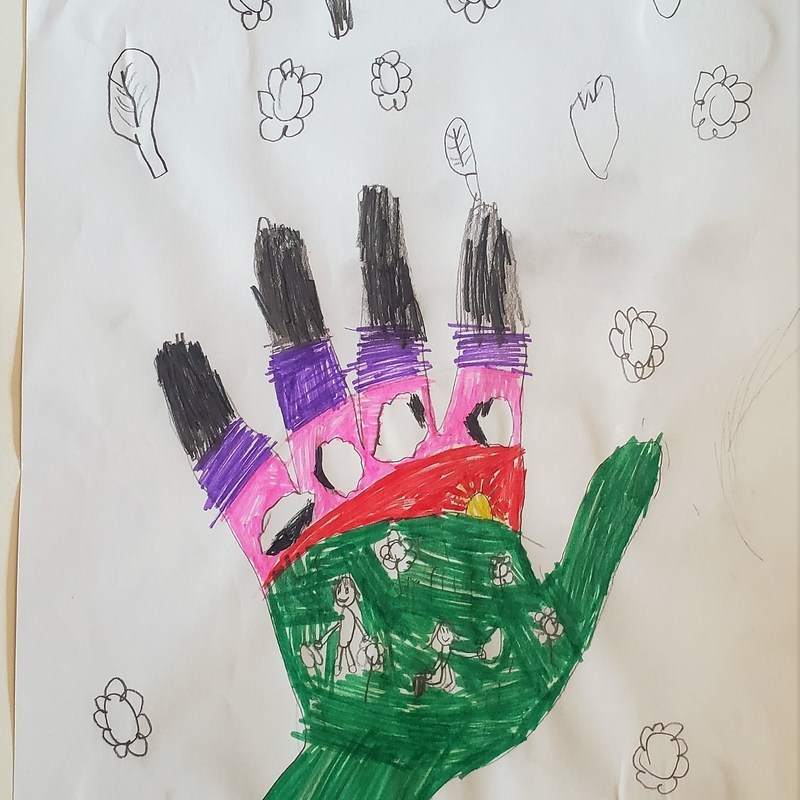
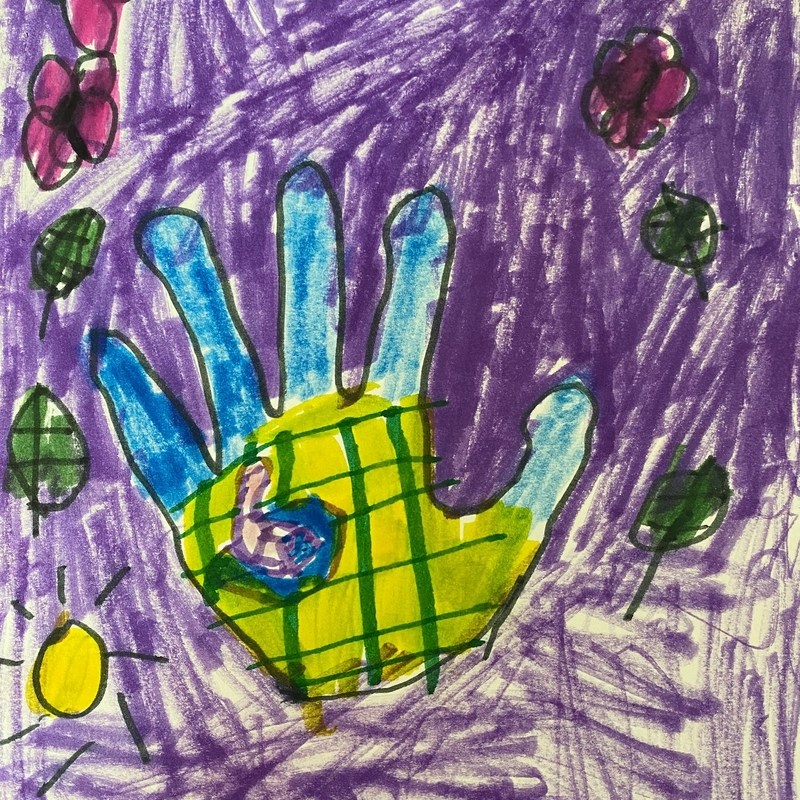
For Earth Day with lower elementary and kindergarten, we read the book Earth Day by Todd Parr, which is about different ways people can help the Earth. Then, we brainstormed different ways we can help and honor the Earth (turning off the lights, planting flowers, recycling, walking, etc.). Students traced their hand onto their paper and drew a picture of themselves helping the environment inside the hand, and in the background, students drew their favorite place in nature or other things they appreciate about nature.
In the spring, we were still mostly doing virtual school, so short, one-day lessons worked the best, because otherwise, many students misplaced their art and would have to start over in the next class.
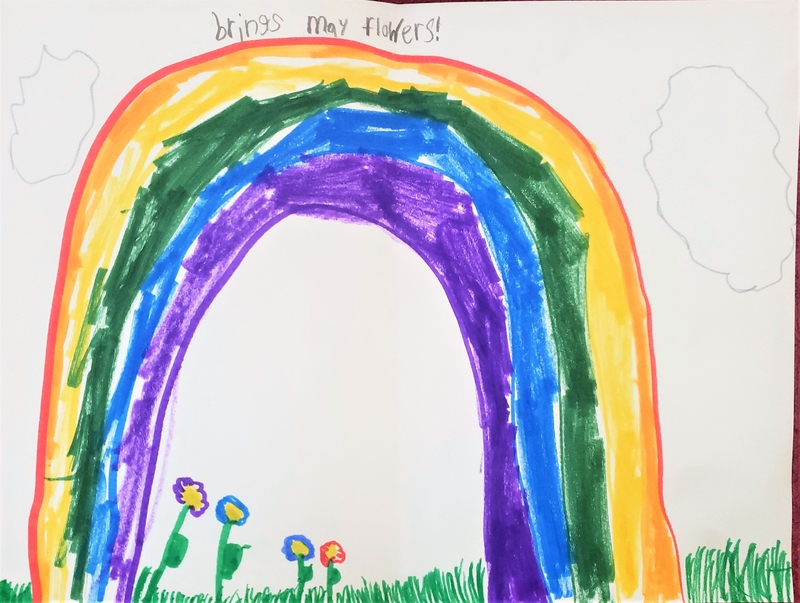
April Showers Bring May Flowers
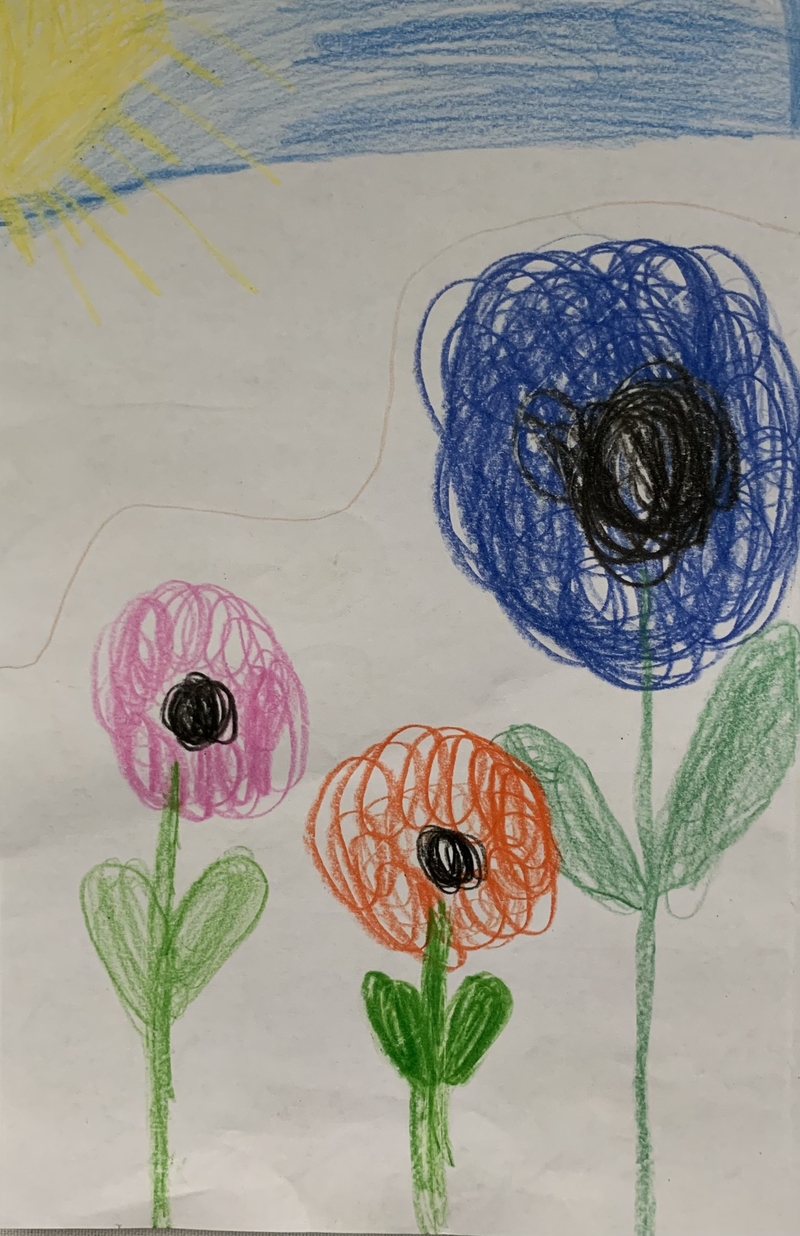
Another one-day lesson I did was this “April Showers Bring May Flowers” card. On the outside, students used cool and neutral colors for April Showers, and on the inside, students used bright colors and the rainbow to show “May flowers”. We also reviewed the colors of the rainbow (can’t forget about indigo!).
These three lesson ideas are related to looking at cells and microbes up close and under microscopes.
Low-Relief Cell Models
Students will observe images of cells and create a three-dimensional model of the image of their choice. Students will construct their model on a cardboard base, but the materials for the actual cell are left open to interpretation.
Students should pick out 4-6 images and make thumbnail sketches of each image and jot down ideas about possible materials that could be used for each part of the cell/microbe. A sample sketch is below, but allow students to sketch out their ideas in the way that works best for them.
Once students have completed their thumbnail sketches, they should pick one sketch that they want to do the most, and then they can make one more sketch of their final idea, colors, and material choices.
Materials:
cardboard
pipecleaners
glue
thread/yarn/string
fabric
toothpicks
cotton balls
sequins
beads
glitter
pom poms
feathers
buttons
popsicle sticks
tissue paper
aluminum foil
wire
clay
felt
paint
Next, students can begin to assemble their cell models. First, they need to create a circular base out of cardboard for their relief sculpture. Students can paint the base if they would like to (helpful hint – spray water on the back of the cardboard after painting to reduce warping). Next, students can choose whatever materials they want to construct the cell/microbe. Let students experiment with the materials and figure out what works best to create their cell model. Have a table with all the materials laid out so that students can visualize the possibilities for all the materials. Allow ample time for students to construct their models and add paint/ finishing touches.
Cell Models Sculpture
In this variation, students create an in the round sculpture of a cell. This project is similar to the previous project, yet it is not a relief sculpture. Depending on the materials you have on hand, pick one of the projects to best fit what you have. First, have students create a base/cell body using either clay, newspaper/ paper mache, plaster, wires to create an armature, or aluminum foil. Next, students can paint the base, adding designs and surface texture with different materials (glitter, sequins, beads, etc.). To create raised areas of lines, hot glue, elmer’s glue, or fabric paint can be applied to the surface as well. Once the paint is dry, students can attach pipecleaners, toothpicks, pompoms, and other materials to form the areas that come off of the body of the cell.
Picture Guessing Game – Show students close up images/ macro photography and have students guess what the images are.
Making a sketchbook to record observations – Show students how to fold and create their own sketchbook from one sheet of paper. Use an 18 x 24″ piece of paper if possible, or the largest paper that you have. Here is a video about how to create the sketchbook: https://www.youtube.com/watch?v=XZ9Jw4HnJpw
Cell Observation Stations
Set up 3 stations – one with a microscope, one with cell books, and one with a video of cells under a microscope. Give students about 5 minutes at each station to make observations and make sketches/take notes in their sketchbooks of what they see. Once each group of students has gone to each station, regroup as a class and discuss what the students saw and the drawings they made at each station.
The Project: Students will create their collagraph plate using a variety of materials, such as: glue, found objects, tape, rubber bands, string, foam shapes, felt/fabric. First, students glue the materials onto their cardboard plate in a design inspired by their observations of cells. While the plates are drying, students can prepare their paper for printing. Students can cut out the papers to the right size, write their names on the back of each, and apply a wash of watercolor to each paper. If there is still extra time, students can decorate the cover of their observation sketchbook.
The next class, once the plate is dried, students can begin the printmaking process. Before students begin the process, do a demonstration of how to make prints. Then, at one table (where no students are sitting), set up brayers and plates of ink. Set up an assembly line process where students ink up their plates, then print the plates, and then place their print on the drying rack. After students make a print, have them label the print with their name, the number of the print, and the date.
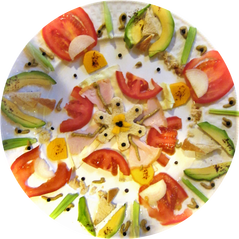
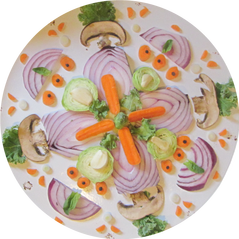
When I was in high school, I took a summer 3D art course at my local community college. One of the projects we did was making mandalas out of food using ingredients to a recipe. I really enjoyed this project and I think it would be a fun lesson to teach students.
Students can create a mandala using ingredients of a recipe, or as an alternative, students can use school supplies, cosmetics, or other non-perishable materials.
Vocabulary: Radial Balance, Symmetry
Photography/Sculpture Homework Assignment: Think about a food you eat. It can be as simple as a peanut butter and jelly sandwich or more complex, like vegetable soup or a rice bowl. Gather the ingredients you use to make your favorite meal and arrange them in a mandala shape. Think about layering the ingredients, using cookie cutters to create interesting shapes, and how to arrange the materials on a plate. When you’re finished, document your creation by taking pictures in a well-lit setting or by a window (natural light is best). Write down the recipe that goes with your creation – it does not have to be complex or precise, just write down the ingredients/materials you used and the food that it can make.
In one of my art ed classes in college, we had to make a teacher’s resource notebook. One of the sections we had to make was about motivation, warm-up, and intro activities. Here are some of the ideas:
MOTIVATION
Art Poses – In the beginning or end of class, have everyone stand up and stretch. Show students different artworks on the projector, and have students try to mimic the poses of the artworks. See possible examples below:
Drawing from Directions – One student receives a drawing/image of an artwork and describes the drawing to another student who can’t see the drawing. The student not looking at the drawing tries to replicate the drawing based on the other student’s directions.
Artist Knowledge Game – Separate the class into groups of 4 or 5 or if tables are set up, each table is a team. Have students work together to list as many artists possible in 3 minutes. As a variation, have students make a list of as many art materials they can think of, art movements, art techniques, female artists, etc.
Art Memes – If memes are still relevant, show high school students several art related memes and ask students to name the artist or art movement the meme references. Try to find memes that relate to the topic students are learning about. Or, have students research and find a famous work of art and make a meme out of it (make sure it’s school appropriate!). If you search art memes in Google, you will find plenty of examples.
Art Captions – Print out several works of art, and have students work together in small groups or individually to come up with a creative caption. Or print out one large image of an artwork and give each student a speech bubble sticky note which they can write dialogue on and stick onto the artwork.
Scribble Game or Exquisite Corpse: For the scribble game, students work with a peer. Each student draws a scribble (using your non-dominant hand produces a nice scribble) and then trades papers. The other student tries to make a picture out of the scribble. For exquisite corpse, students fold a piece of paper into thirds. The first student draws a head in the top section, then folds it down, making sure some of the drawing goes into the second section. The next student draws the middle section, then folds it down and passes it along again. The last student draws the legs/ feet.
Roll a Die: Students each get a die and there will be a handout or projection of the meaning of each die number. Each die number will represent a different art technique, such as 1 – lines, 2- dots, 3 – squiggles, 4 – draw with your non-dominant hand, 5 – draw with a ruler, and 6 – crosshatching. Students will draw an object or draw abstract shapes using the rules. Whatever die number they roll corresponds to the technique they use in their drawing.
INTRODUCTION – These are activities/ discussions at the beginning of class to introduce a topic or idea.
What is art? This could be a good activity for the first day of a high school art class. Students all get a scrap of paper and write down what they think art is. Then, the students hang up all the papers onto the chalkboard, and the class discusses what art is and what the best definition for art is. Consider discussing controversial artworks (like Duchamp’s Fountain) and also everyday objects such as tables, chairs, cereal boxes, etc. Point out specific objects in the classroom, or have students bring in/ gather objects and discuss whether or not it is art. All of these objects had a designer/ artist behind them, so should they be considered art? Why or why not?
Automatic Drawing: In discussion of the relationship between sound and visual, students will listen to music and draw based on what they hear. Each student will get a piece of paper and pen or pencil. One or two songs will be played (perhaps one classical and one modern song), and students will either close their eyes or not look at the paper as the music plays, keeping their hands moving the entire time. To discuss the relationship between art and music, consider showing this video: https://www.youtube.com/watch?v=pPpkaldk84Y&list=LLbdSa5DkZl5N2WXWJ3ZZA8g&index=3&t=0s
Make a Pizza: At each table or the front of the classroom, lay out a variety of materials (including paper, cotton balls, paint, glue, sequins, fabric scraps, etc.). Each student constructs a piece of “pizza” using any materials they want. Then, working at their tables, they put all the pieces of pizza together to make a whole pizza. Then, they grab a different slice of pizza and add on to that pizza. They repeat these steps one more time until each table has a very crazy-looking pizza. For high school students, encourage them to take a picture of the pizza at each stage, or perhaps the teacher can take the pictures. The students can loosen up with this activity and see how sometimes, it’s good to keep adding on to their art, even if it gets kind of crazy.
WARM-UP ACTIVITIES
Sticky Notes: Everyone grabs a sticky note when they come into the classroom and draws something on it, making sure some of the lines go off the page. Then, students use more sticky notes to combine all of their sticky note drawings in a grid at their tables. To expand it further, then have the whole class come together to connect all the sticky notes.
Observational Drawing: At the start of class, everyone grabs an object from the bin of objects at the front of the classroom. Students can grab up to 4 objects to create an interesting composition. Then, students arrange the objects in front of their work area and draw the objects from observation (materials may be pre-selected, like charcoal or pencil, or students may have several choices of material).
Art on the Projector: Project an artwork on the screen (with no information about title, artist, or anything else) and have students write down as many observations on the artwork as they can. Ask students to consider the following:
What do you see?
Elements of art? Principles?
What do you think the artist is saying?
When do you think this work is from?
Who do you think the artist is?
What materials do you think were used?
What first stands out to you in this piece?
What would you title this piece?
Have you seen this artwork before?
Where do you think it is from?
What questions do you have about this work?
Prompts/Questions: There will be a question written on the board or a prompt which students will start working on when they come into the classroom. They will respond in their sketchbooks/ notebooks. Questions should relate to the material that was covered last class or to an upcoming project/idea.
Prompts for Younger Students (Elementary/Middle school)
Objects:
Draw what you ate for dinner last night
Draw your favorite food
Draw a birthday cake for a family member, a pet, or yourself
Set up a still life at each table and have students draw from it
Draw your backpack and everything inside it
Places:
Draw/paint your bedroom from memory
Draw your house
Draw your favorite place to play
Draw the woods, trees
Draw the playground, the school
Draw the inside of your locker/desk
Animals/Creatures:
Draw an alien, monster, creature, animal, etc.
Draw your favorite animal
People:
Draw yourself (in your favorite place, eating your favorite food, playing outside, in space, riding on the bus, etc.)
Draw your family
Draw your friends
Draw the people sitting at your table
Limitations
Draw a picture using only:
the primary colors
secondary colors
black and white
only one color
your favorite colors
Imagination
Draw what you think computers look like on the inside
Draw the inside of your mind
Draw what you think the future looks like (aliens, robots, space?)
Prompts for Older Students (High School)
Make a value scale, color wheel, practice drawing different textures, art techniques
From Observation
Draw your shoes
Draw your backpack
Draw the classroom
Find an interesting object in your backpack – draw it
People
Self-portrait
Draw the people at your table
Blind contour drawings of people, contour line drawings, shaded drawings
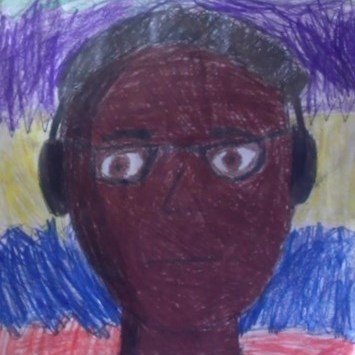
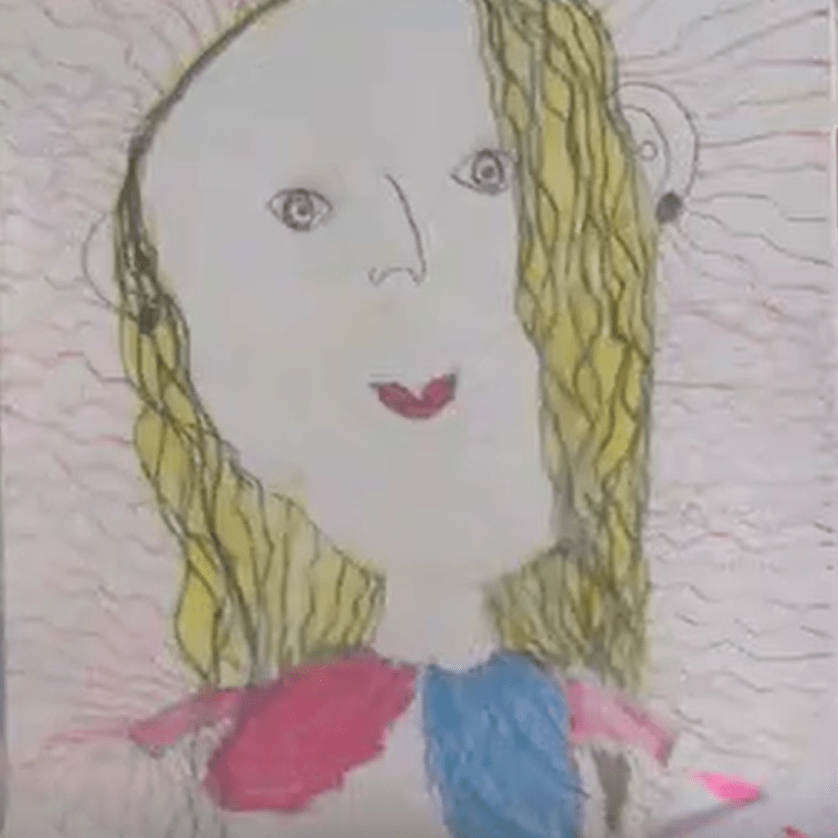
I started teaching at my current school in February 2021. Because I was a new teacher starting mid-year and I wanted to get to know my students, our first project was a self-portrait lesson. We looked at Kehinde Wiley’s art and compared old, neoclassical art with Wiley’s updated versions of these artworks. We also discussed patterns, colors, and representation in art and throughout art history.
Students then created their own versions of a self-portrait with their own patterns and designs in the background.
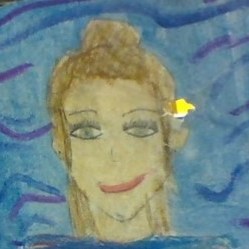
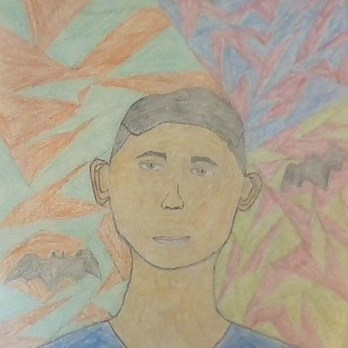
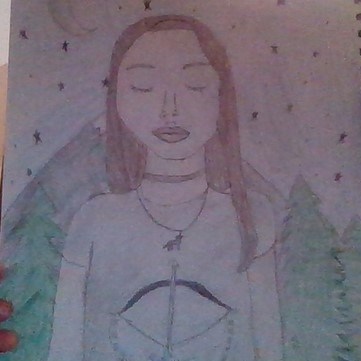
Here are some of the self-portraits made by my students:
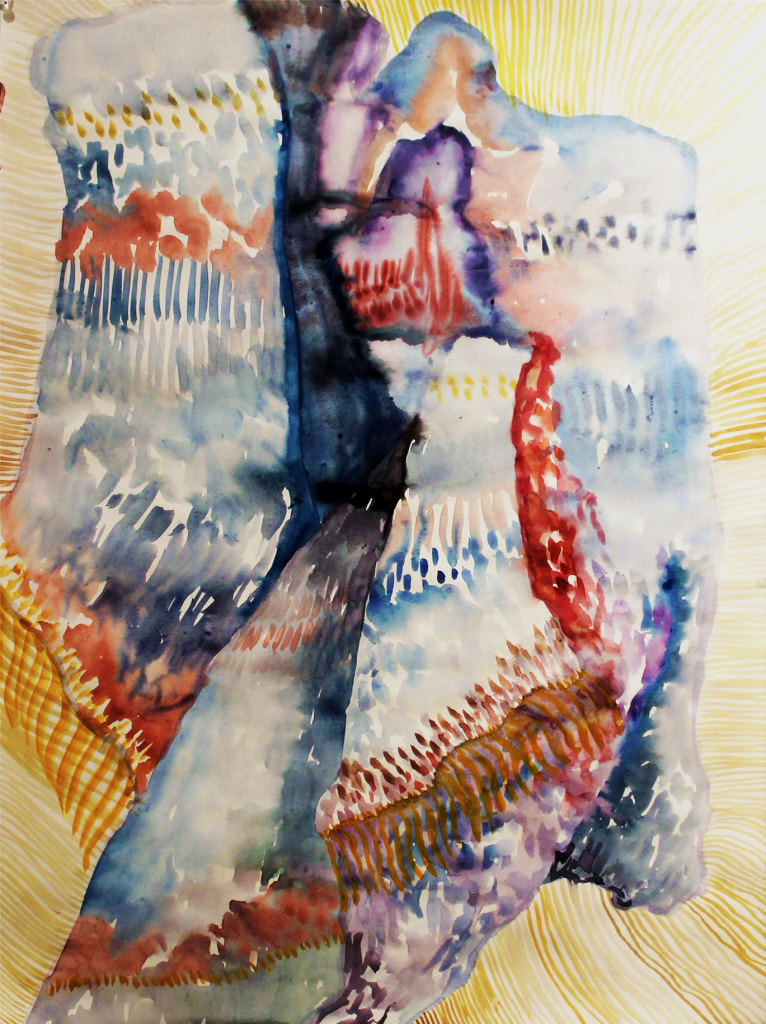
For the future, I would also include an alternative assignment where students can create an indirect self-portrait. Students can choose an object that means something to them (for example, a toy, a book, clothing, etc.) and draw that object.
For example, I did an indirect self-portrait in college of a scarf because I am known for always wearing scarves:



















































 Annika Marthinuss

